Content
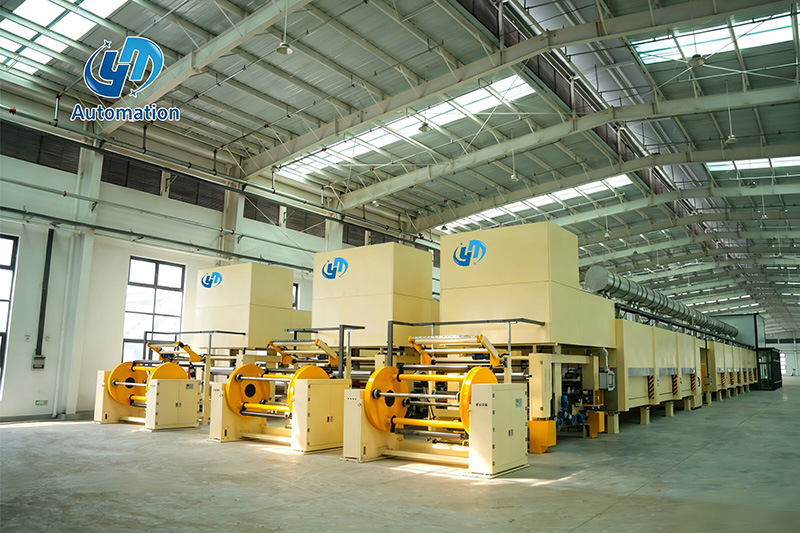
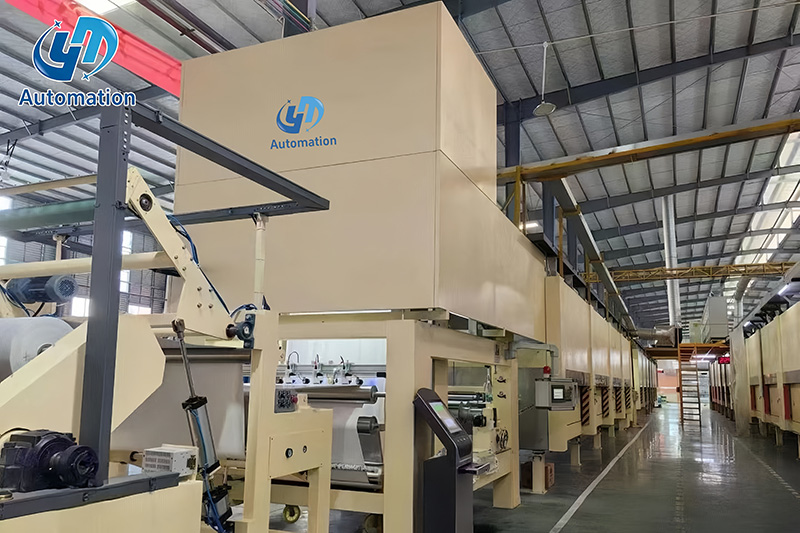
A Dryer For Impregnated Decorative Paper is a precision temperature-controlled oven that removes moisture and volatile compounds from decorative paper after it has been saturated with melamine formaldehyde or urea formaldehyde resin, simultaneously advancing the resin from its liquid B-stage state toward a partially cured, handleable C-stage without triggering full cross-linking. The two most critical quality parameters the dryer must control are volatile content, targeted at 6 to 7 percent by weight, and pre-curing degree, which must remain below 65 percent, since paper that exits the dryer with too little volatility will not flow correctly during lamination pressing, while paper that is over-cured will not bond to the substrate at all (Source: Fimo Decorative Material, Melamine Impregnation Technical Guide; ResearchGate, Drying and Curing Behaviour of Melamine Formaldehyde Resin Impregnated Papers). Without a properly controlled dryer in the impregnation line, every sheet of finished impregnated paper would be either unusable or unpredictably variable in its lamination performance.
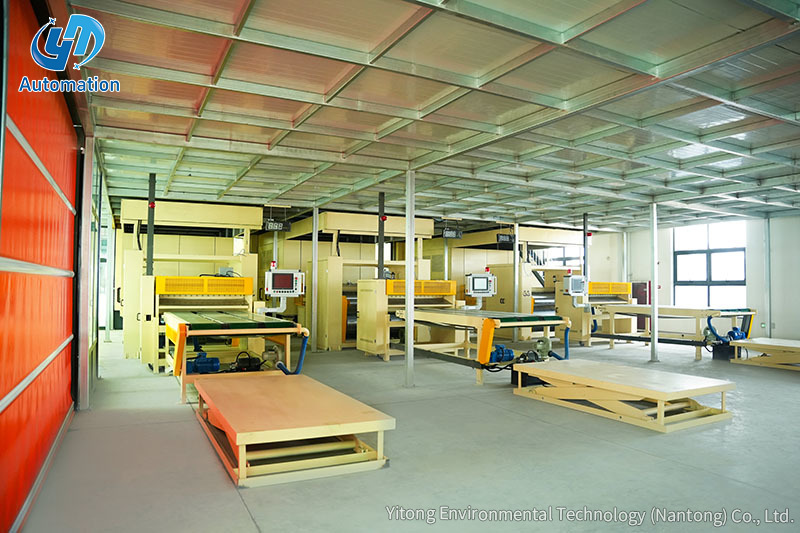
The impregnation line for decorative paper involves several sequential process stages: resin preparation, first impregnation, first drying, second impregnation, second drying, cooling, and cutting. Decorpaper Supplier's manufacturing process overview confirms this full sequence: glue making, glue preparation with curing agent and release agent additions, first impregnation with mixed melamine formaldehyde and urea formaldehyde resin, first drying, second impregnation with melamine formaldehyde resin and wear-resistant layer, second drying, cooling, and cutting (Source: Decorpaper Supplier, Melamine Impregnated Paper Manufacturing Process).
Within this sequence, the dryer appears twice and is the only machine that directly determines the three quality indicators that govern whether the finished impregnated paper will laminate correctly. ResearchGate's peer-reviewed analysis of drying and curing behaviour explains why: the drying of impregnated papers is critical with respect to premature curing, because the melamine formaldehyde resin undergoes polycondensation cross-linking during drying, releasing water molecules as it cures, and the operator must maintain drying conditions that eliminate physical water without advancing the chemical cross-linking to a degree that makes the resin unable to flow and bond during subsequent hot pressing (Source: ResearchGate, Drying and Curing Behaviour of Melamine Formaldehyde Resin Impregnated Papers, 2020).
Hallmark's impregnation line component documentation confirms the machine-level responsibility: the dryer is responsible for removing moisture from the impregnated melamine paper, ensuring proper curing and setting of the resin, with the dryer section being one of the main components of any complete melamine paper impregnation line alongside the resin coating unit, paper feeding system, impregnation unit, and cooling section (Source: Hallmark, Melamine Paper Impregnation Line).
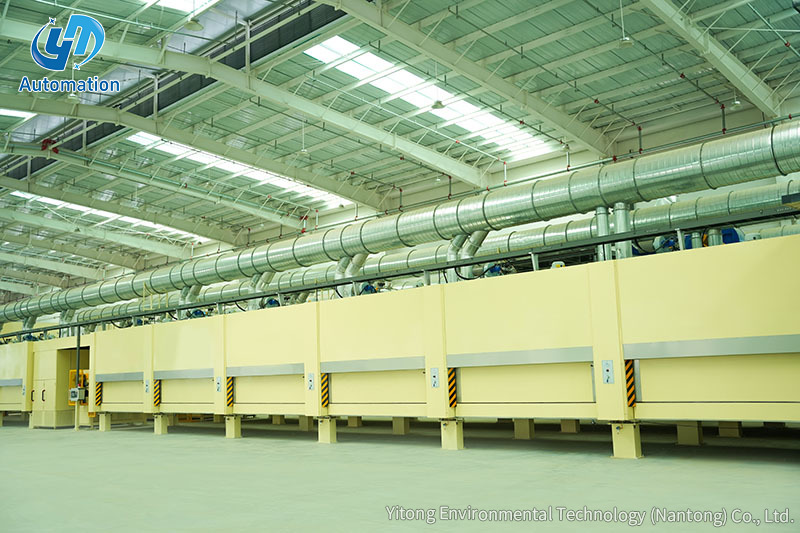
The dryer's output is not simply dry paper. It is paper that meets precise specifications across three interdependent quality parameters, each of which affects the performance of the finished laminate panel.
Volatile content is the percentage of remaining moisture and low-molecular-weight compounds in the impregnated paper after drying, measured by weight loss when the sample is heated at 160 degrees Celsius for 10 minutes. Fimo Decorative Material's technical lamination guide specifies that the volatile content for finished impregnated paper should be 6 to 7 percent (Source: Fimo Decorative Material, Board Lamination Technical Guide). Decorpaper Supplier's quality specification confirms the same range: volatile matter content at 160 degrees Celsius for 10 minutes should be 6 to 7 percent (Source: Decorpaper Supplier, Melamine Impregnated Paper). This narrow target range matters because too low a volatile content means the resin lacks the residual flow needed to wet the substrate surface during pressing, while too high a volatile content causes steam bubbles and surface blistering in the finished laminate panel.
Pre-curing degree is the percentage of the resin's total cross-linking that has already occurred before the paper reaches the lamination press. The specification limit is 65 percent maximum, meaning at least 35 percent of the resin's curing capacity must be reserved for the final pressing stage. Fimo Decorative Material states this limit directly: impregnated paper requires the pre-curing degree to be no more than 65 percent (Source: Fimo Decorative Material, Board Lamination Technical Guide). When pre-curing degree exceeds this limit, the resin has already formed too rigid a network to flow and bond during pressing, producing delamination, surface cracking, or insufficient adhesion to the substrate panel.
Resin content is the ratio of solid resin to the weight of the impregnated paper, typically targeted at 130 to 150 percent for decorative lamination paper. Although resin content is primarily controlled by the impregnation bath concentration and the doctor blade or squeeze roll settings rather than by the dryer itself, the drying stage affects apparent resin content because it changes the total paper weight by removing volatile mass. Fimo Decorative Material specifies that resin content should be 130 to 150 percent, and that low resin content results in low paper strength and easy dimexing while excessive resin content causes cracking (Source: Fimo Decorative Material, Melamine Impregnation Technical Guide).
| Quality Parameter | Target Range | Measurement Method | Effect If Out Of Range |
| Volatile content | 6 to 7 percent | Weight loss at 160 degrees C for 10 minutes | Too low: poor resin flow; too high: surface blistering |
| Pre-curing degree | Maximum 65 percent | Resin extractability or solubility test | Exceeding limit causes delamination and surface cracking |
| Resin content | 130 to 150 percent | Weight gain relative to dry paper weight | Too low: weak bond; too high: brittle surface cracking |
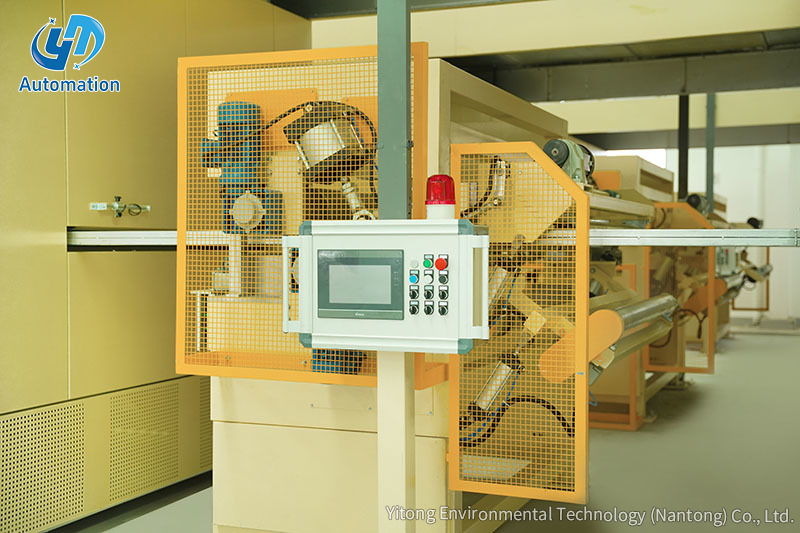
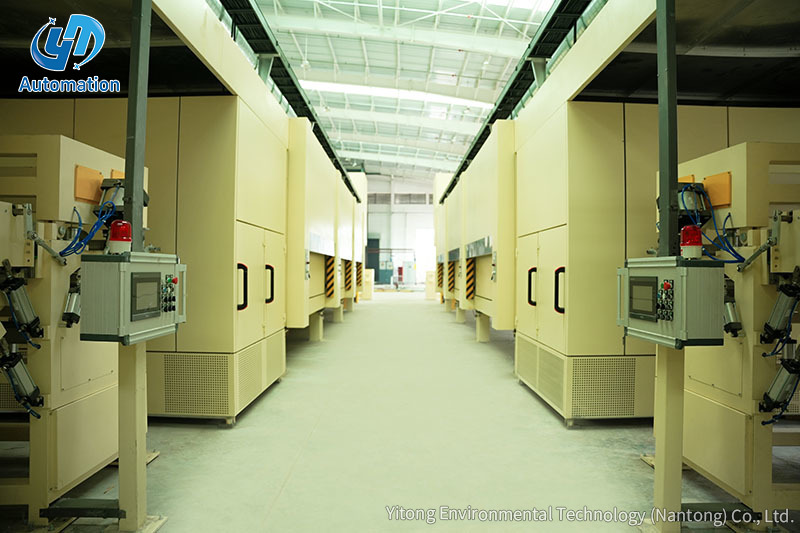
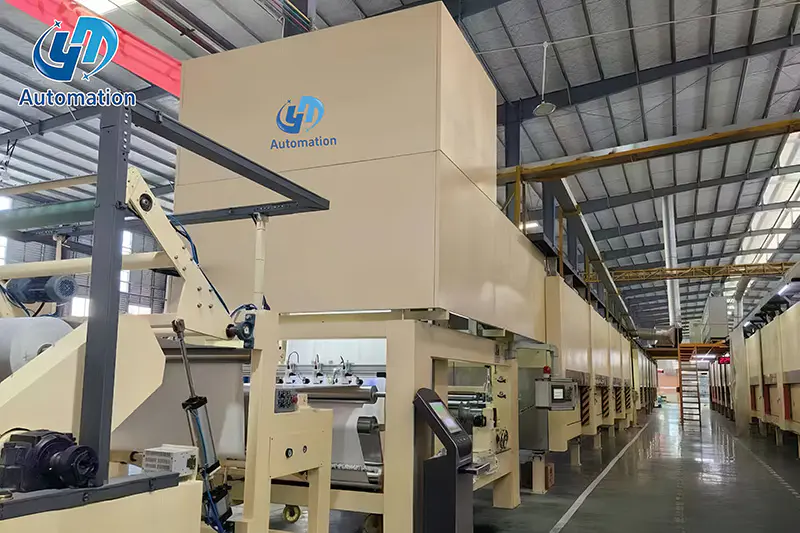
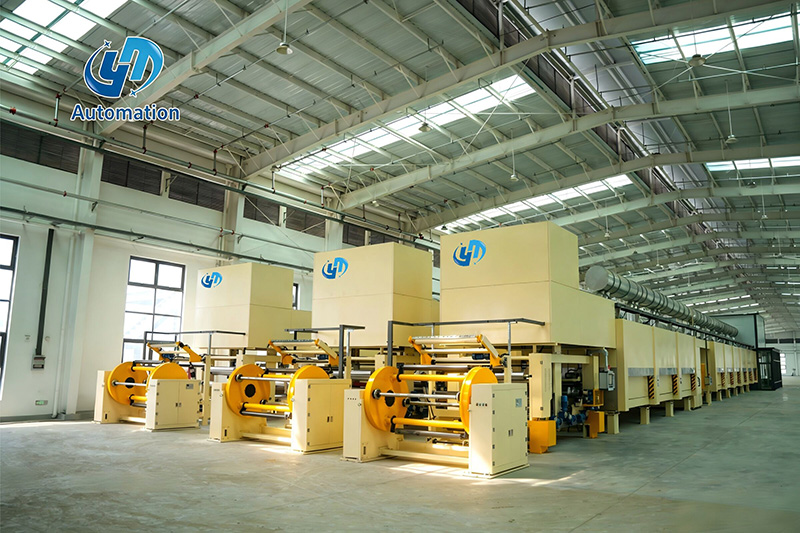
The dryer for impregnated decorative paper is a convection oven through which the continuous paper web travels at a controlled speed, with temperature, airflow velocity, and the length of the drying section working together to deliver the paper to exit conditions that meet the volatile and pre-curing specifications.
Published manufacturing process data from multiple laminate patent filings confirms the operating temperatures used in industrial dryers for impregnated decorative paper. A hot air dryer drying surface layer decorative paper impregnated with melamine formaldehyde resin operated at 120 degrees Celsius for 90 seconds to achieve a volatile content of 6 percent, while a kraft paper core layer was dried at 130 degrees Celsius for 150 seconds to achieve a volatile content of 4 percent (Source: USPTO Patent 10279571, Decorative Melamine Board). Separately, a Shinewaypaper technical guide on the impregnation method references drying impregnated paper in an oven heated to approximately 165 degrees Celsius for overlay paper containing a catalyzed melamine formaldehyde resin system (Source: Shinewaypaper, Method of Impregnating Decorative Paper with Melamine Resin). The range of 120 to 165 degrees Celsius across different paper types, resin systems, and dwell times reflects the importance of matching dryer settings precisely to the specific impregnation chemistry in use.
Temperature and dwell time interact in controlling both physical water removal and chemical cross-linking advancement. Higher temperatures remove moisture faster but also advance cross-linking faster, which risks premature curing if the paper moves too slowly through a high-temperature zone. Lower temperatures require longer dwell times to achieve the same moisture removal but provide more processing latitude to avoid pre-curing. In practice, dryers for impregnated paper are typically divided into multiple temperature zones, with earlier zones running at higher temperatures to drive off bulk moisture quickly and later zones running at lower temperatures to fine-tune the final volatile content without advancing the pre-curing degree further.
Removing moisture and volatile organic compounds from the paper surface requires not only heat but also airflow to carry the evaporated material away from the paper surface and out of the dryer. Without sufficient airflow, the local humidity above the paper surface rises, reducing the driving force for further evaporation and slowing the drying rate. The ventilation system must also handle the low-molecular-weight formaldehyde and methanol compounds that are released from the melamine and urea formaldehyde resin systems during drying, which requires exhaust management appropriate to the chemistry involved.
Industrial impregnation of decorative paper for laminate panels typically uses a double-impregnation sequence, and the dryer appears between each impregnation stage as well as after the final impregnation.
In the first impregnation stage, the paper is saturated with a base resin system, often a mixture of melamine formaldehyde and urea formaldehyde resins, which penetrates the paper fiber structure and provides the core bonding layer. The first dryer removes the bulk of the carrier solvent and advances the resin to a stable B-stage condition. In the second impregnation stage, a second resin coating, typically pure melamine formaldehyde with any wear-resistant additives such as aluminium oxide particles, is applied to the surface. The second dryer then brings the fully impregnated paper to the final volatile and pre-curing specification that it must meet when it leaves the line as a finished product.
A patent on the process for manufacturing decorative thermoset plastic laminate describes this two-stage approach: the paper web is first impregnated and continuously dried in a heating oven to a moisture content of 10 percent by weight, then coated with a second layer and continuously dried in a second oven until the moisture content reaches 7 percent by weight, with aluminium oxide particles applied between the two drying stages for wear-resistant surface paper (Source: USPTO Patent 6106654, Process for the Manufacturing of a Decorative Thermosetting Plastic Laminate).
The consequences of incorrect dryer settings propagate forward through every subsequent process stage and ultimately determine the quality of the finished panel that reaches the furniture or flooring manufacturer.
Fimo Decorative Material's impregnation guide notes that testing should be performed every 30 minutes during production to verify resin content, volatile content, and pre-curing degree are within specification, confirming that the dryer's output requires active monitoring rather than a set-and-forget operating approach (Source: Fimo Decorative Material, Melamine Impregnation Technical Guide).
The quality of the dryer's output also determines the shelf life and storage requirements of the finished impregnated paper. Paper that exits the dryer within the correct volatile and pre-curing specifications has a shelf life of approximately 3 months when stored under the right conditions. Fimo Decorative Material specifies storage at a relative humidity of 60 plus or minus 5 percent and a temperature of 20 to 25 degrees Celsius, with paper sealed in film packaging to prevent moisture absorption (Source: Fimo Decorative Material, Board Lamination Technical Guide). Decorpaper Supplier confirms the same shelf life: impregnated paper stored correctly can be used within 3 months, and the paper is at risk of becoming sticky if moisture is absorbed after packaging (Source: Decorpaper Supplier, Melamine Impregnated Paper).
Paper that exits the dryer with incorrect volatile or pre-curing values will not achieve this shelf life even under correct storage conditions. Over-cured paper continues to advance chemically during storage, consuming its remaining bonding capacity, while under-dried paper absorbs additional moisture and becomes sticky or dimensionally unstable. This means that every downstream quality problem traceable to impregnated paper storage is ultimately also a dryer control problem.
Key dryer specifications that must be matched to the production requirements of any impregnation line include the following:
The Ytinte Dryer For Impregnated Decorative Paper is engineered to the temperature precision, zone control, and airflow design requirements that the volatile and pre-curing specifications of melamine and urea formaldehyde impregnated decorative paper demand, providing laminate producers with the process stability needed to consistently hit the 6 to 7 percent volatile content and sub-65 percent pre-curing targets that determine the lamination performance of every sheet that leaves the production line.
Contact Us
Recommended Products
Let’s Get In
Touch
Yitong Environmental Technology (Nantong) Co., Ltd is a manufacturer specializing in impregnation equipment.


Contact Us
Phone: 13073202297 / 13023568111(WhatsApp/Wechat)
Email: [email protected] / [email protected]
Add:No.369, Nanhai Road, Tongzhou Bay, Nantong, Jiangsu, China


 English
 中文简体
中文简体
 русский
 عربى
عربى