Content
An intelligent glue mixing system is an automated platform that measures, blends, and delivers precisely formulated resin mixtures to multiple stations on an impregnating or coating production line — in real time, without manual intervention. Rather than relying on operators to weigh and mix raw resin, hardeners, catalysts, and other additives by hand, the system uses sensors, flow meters, programmable controllers, and feedback loops to produce glue at the exact ratio required by each section of the line, whether that is the impregnating tank, the spraying machine, or the secondary coating station.
The result is a manufacturing process that is more consistent, more material-efficient, and significantly less dependent on individual operator skill. Batch-to-batch variation — one of the most persistent quality problems in resin-based production — is dramatically reduced because every mixing decision is governed by pre-programmed recipes and closed-loop sensor feedback rather than human judgment.
This article explains how intelligent glue mixing systems are structured, how their core subsystems interact, what data they collect and act upon, and why they represent a meaningful operational upgrade over manual or semi-automatic mixing approaches.
An intelligent glue mixing system is not a single machine but an integrated network of hardware and software subsystems working in coordination. Understanding the architecture helps clarify how intelligence is actually implemented in practice.
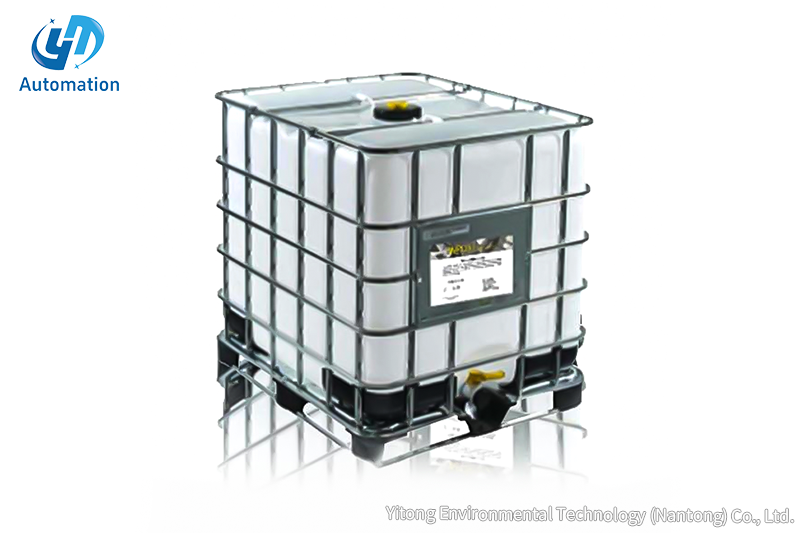
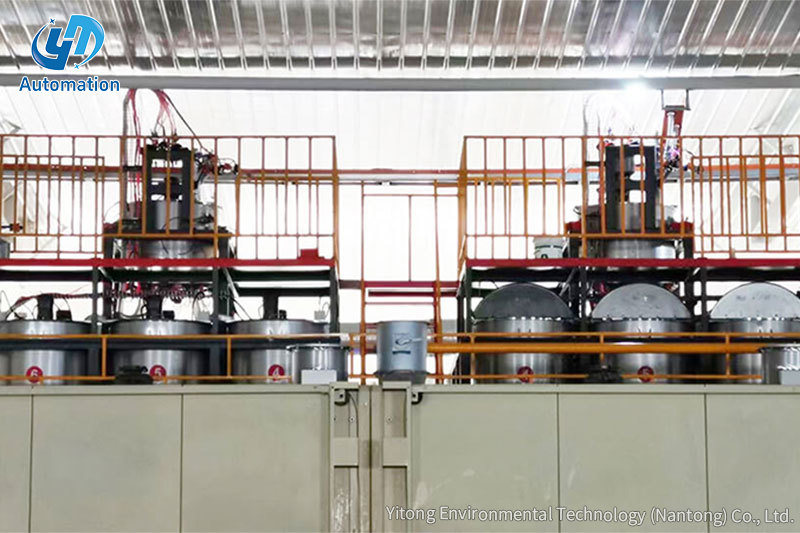
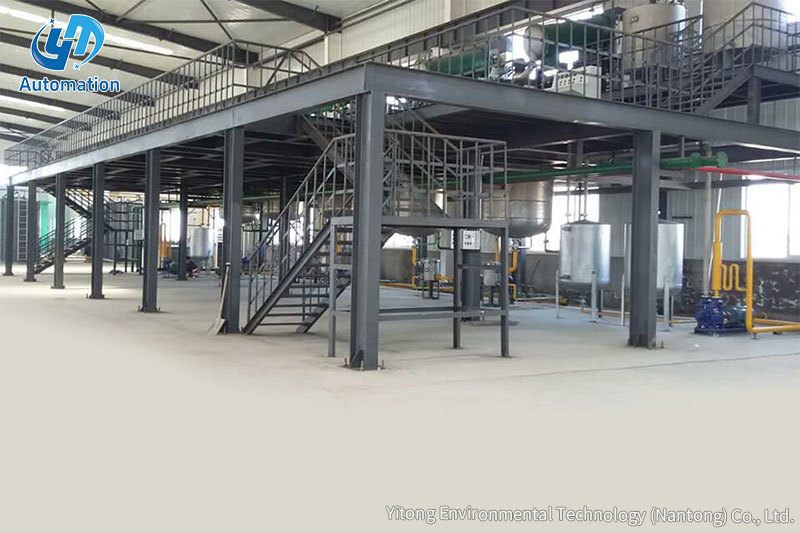
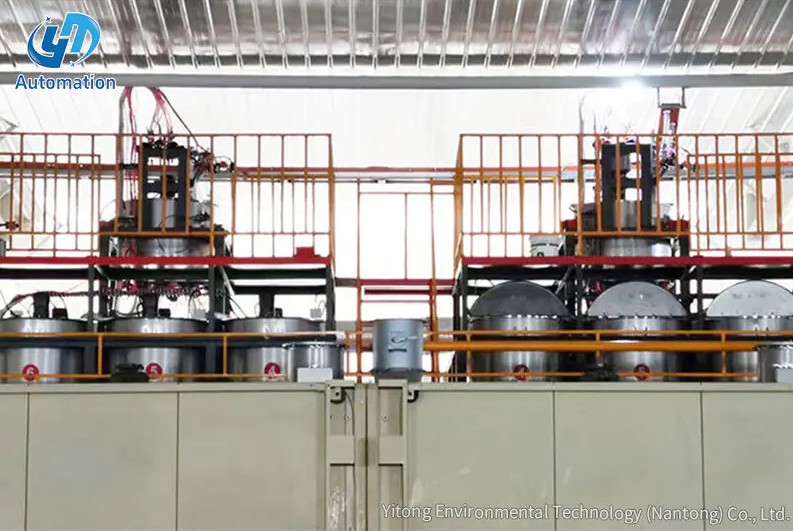
The system begins with dedicated storage tanks or vessels for each raw material: base resin, hardener, catalyst, release agent, wetting agent, and any other additives specific to the production process. These tanks are typically stainless steel or high-density polyethylene (HDPE) to resist chemical corrosion, and they are equipped with level sensors that continuously report fill status to the central controller. Low-level alarms prevent the system from attempting to mix with depleted ingredients, which would otherwise cause incorrect ratios to reach the production line undetected.
Each tank feeds into a dedicated metering and delivery line, so there is no cross-contamination risk between ingredients before the controlled mixing point. Temperature control elements — typically heating jackets or inline heat exchangers — are applied to tanks containing viscosity-sensitive resins that must be maintained above a minimum temperature to flow and meter correctly.
This is the technical heart of the system. Each ingredient line is equipped with a precision metering device — commonly a mass flow meter (Coriolis type) or a volumetric flow meter (gear or oval gear type) — that measures how much of each ingredient is being delivered to the mixing chamber at any given moment. These meters communicate with the central PLC (Programmable Logic Controller) at update rates of 10–100 times per second, giving the controller continuous visibility into actual flow versus target flow.
Coriolis mass flow meters are the preferred choice in high-accuracy systems because they measure mass directly, unaffected by temperature or pressure changes that would introduce errors in volumetric measurements. In a typical installation, metering accuracy is maintained at ±0.5% or better, which translates directly into consistent resin-to-hardener ratios and predictable cure behavior in the finished product.
Proportioning pumps — often gear pumps or peristaltic pumps depending on the viscosity and abrasiveness of the fluid — are driven by variable-frequency drives (VFDs) that adjust pump speed in real time based on flow meter feedback. If the meter detects that a component is flowing faster or slower than the recipe demands, the VFD corrects the pump speed within milliseconds.
Once the correctly proportioned ingredient streams converge, they enter a mixing chamber designed to produce a homogeneous blend before the glue is delivered to the production station. Mixing technology varies depending on the resin chemistry and production volume:
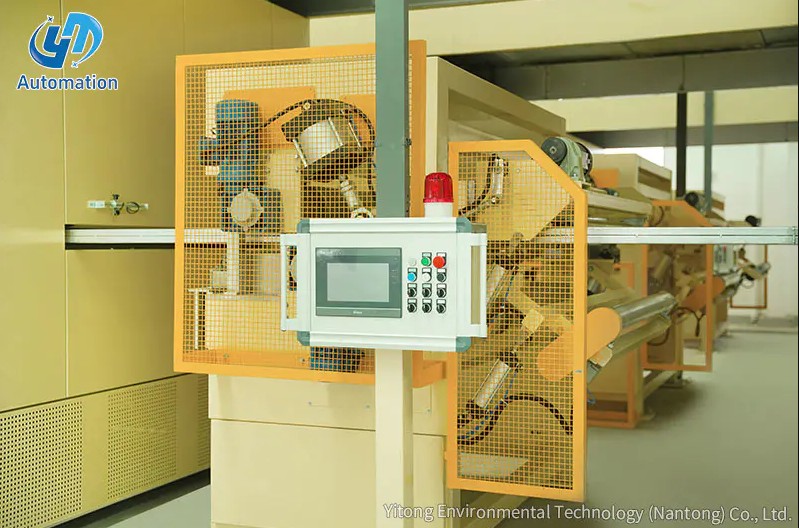
All subsystems — storage tanks, meters, pumps, mixers, temperature controllers, and distribution valves — are coordinated by a central PLC that executes the mixing recipes and responds to sensor feedback in real time. Operators interact with the system through an HMI (Human-Machine Interface) touchscreen panel, where they can:
More advanced installations connect the PLC to a plant-level SCADA (Supervisory Control and Data Acquisition) system or MES (Manufacturing Execution System), allowing production data to be aggregated, trended, and acted upon at the factory management level.
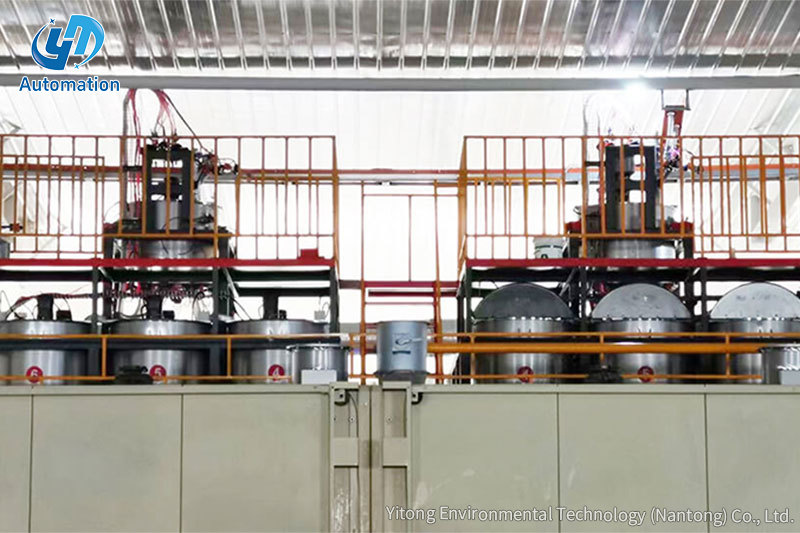
One of the defining features of an intelligent glue mixing system in an impregnating and coating line is its ability to supply different formulations to different production stations at the same time. This is more complex than it might initially appear, because the impregnating station, the spraying machine, and the secondary coating machine each have distinct requirements.
| Production Station | Typical Resin Solid Content | Key Additives | Viscosity Range |
|---|---|---|---|
| Impregnating Station | 45–65% | Wetting agents, plasticizers | Low (50–200 mPa·s) |
| Spraying Machine | 30–50% | Release agents, dilution water | Very low (20–80 mPa·s) |
| Secondary Coating Machine | 55–75% | Hardeners, flow modifiers | Medium (200–600 mPa·s) |
To serve these stations simultaneously without cross-contamination or ratio drift, the system uses a network of independently controlled distribution circuits — one per station. Each circuit has its own set-point stored in the recipe database, its own flow meters and control valves, and its own feedback loop. The central PLC manages all circuits in parallel, continuously balancing each station's demand against the available supply from the mixing head.
When a new product is introduced or process conditions change — for example, when the line speed increases and the impregnating station needs more glue flow — the system recalculates all delivery rates automatically and adjusts pump speeds and valve positions within seconds, without requiring the operator to intervene or perform new calculations manually.
The "intelligence" in an intelligent glue mixing system derives largely from its sensor network and the closed-loop control algorithms that act on sensor data. Without continuous feedback, the system would be no smarter than a simple timer-controlled pump — it would dispense ingredients at a fixed rate regardless of whether the actual output matched the target formulation.
Flow meters on each ingredient line provide continuous measurement of actual delivery rates. The PLC compares these to the target ratios stored in the recipe and computes an error signal. If the error exceeds a defined tolerance — typically ±1–2% of setpoint — the controller outputs a correction signal to the relevant pump drive. This PID (Proportional-Integral-Derivative) control loop runs continuously throughout production, compensating for:
In advanced systems, inline viscometers are installed in the mixing output line to measure the actual viscosity of the blended glue before it reaches the production station. Viscosity is one of the most reliable proxies for correct formulation — if the ratio of resin to hardener or the dilution level is wrong, the viscosity will deviate from the target. Inline viscosity measurement allows the system to detect formulation errors that might not be apparent from flow meter data alone, particularly in complex multi-component systems where small ratio errors in one ingredient have an outsized effect on the final mixture behavior.
Temperature sensors (typically PT100 resistance thermometers) are placed in raw material tanks, supply lines, and the mixing chamber. Since resin viscosity changes significantly with temperature — a 10°C increase in temperature can reduce viscosity by 30–50% in some urea-formaldehyde or melamine-formaldehyde systems — the controller uses temperature readings to apply viscosity correction factors to the flow control algorithm, or to activate heating/cooling elements to bring the material back to its target temperature range.
Ultrasonic or pressure-based level sensors in each raw material tank feed continuous inventory data to the control system. The system uses this data to:
At the software level, the system's intelligence is expressed through its recipe management capability. A recipe in this context is a complete specification for a glue formulation — it defines not just the ratio of each ingredient, but also the target viscosity, the acceptable tolerance band around that viscosity, the target temperature range for mixing, the output flow rate per station, and any special mixing or sequencing instructions.
Recipe databases in modern intelligent mixing systems typically store dozens to hundreds of individual formulations, covering every product type, substrate, and process condition the production line is expected to handle. Switching between recipes requires only a few taps on the HMI touchscreen — the controller then automatically adjusts all pump speeds, valve positions, temperature setpoints, and monitoring thresholds to match the new formulation.
A well-designed recipe typically contains the following fields:
Because incorrect formulations can cause significant product defects — poor adhesion, incomplete cure, delamination, or surface defects — recipe management systems include role-based access controls. Production operators may be permitted to select and run recipes but not modify them. Only authorized engineers or quality managers can create or alter recipe parameters, and all changes are logged with a timestamp and user identity for traceability purposes.
The control logic in an intelligent glue mixing system goes beyond simple setpoint-following. It incorporates condition-based decision making that allows the system to adapt to production events without operator intervention.
In impregnating and coating lines, the amount of glue required at each station is directly related to the speed at which the substrate is moving through the line. When the line speed increases, more glue must be delivered per unit time to maintain the correct pickup weight or coat weight. The intelligent mixing system receives a live line speed signal from the production line control system and automatically scales all pump delivery rates proportionally. This closed-loop speed compensation prevents the under- or over-application of glue that would otherwise occur during acceleration, deceleration, or speed adjustments.
The system continuously monitors for fault conditions and executes pre-programmed responses. Common fault scenarios and their automated responses include:
For two-component or multi-component resin systems that begin curing immediately after mixing, pot life management is a critical automation feature. The system tracks the age of each mixed batch and compares it against the pot life parameter in the active recipe. If mixed glue exceeds its pot life — a parameter that may be as short as 30–90 minutes for fast-curing melamine resins at elevated temperatures — the system initiates an automatic flush cycle, discards the aged material, and begins a fresh batch. This prevents partially cured glue from being applied to the substrate, which would cause adhesion failures or surface defects that might not be detected until the finished product reaches quality inspection or even the end customer.
Modern intelligent glue mixing systems generate a continuous stream of process data that is stored in an internal data historian or exported to a plant-level database. This data serves multiple purposes beyond real-time control.
Each production run is recorded with a time-stamped log that includes the recipe name and version, the actual flow rates achieved for each ingredient, the actual viscosity readings, the temperature profile throughout the run, any alarms that were triggered and how they were resolved, and the total volume of mixed glue delivered to each station. This log creates a complete traceability record linking every panel, board, or coated substrate to the exact glue formulation under which it was produced — essential for quality investigations, warranty claims, or regulatory compliance.
Exported process data can be fed into SPC (Statistical Process Control) software to monitor process capability over time. By tracking how consistently the system holds target ratios and viscosity across hundreds of production runs, quality engineers can identify gradual drift — caused by pump wear, sensor calibration shift, or raw material property changes — before it translates into detectable product defects. Studies in resin-impregnating operations have shown that implementing intelligent mixing with SPC monitoring can reduce glue-related product defect rates by 40–70% compared to manual mixing processes.
The metering data provides a highly accurate record of how much of each raw material has been consumed during each production run. This information feeds directly into materials management systems, improving inventory accuracy and enabling just-in-time resupply scheduling. It also enables precise cost allocation by product type — something that is extremely difficult to achieve with manual mixing processes where weighing errors and waste are poorly tracked.
Resin systems that are allowed to cure inside the mixing head, supply lines, or distribution circuit can cause severe blockages that require the replacement of costly components. Intelligent glue mixing systems address this through automated flushing and cleaning sequences that are built into the control logic.
A typical flushing sequence operates as follows:
Automated flushing significantly extends the service life of mixing heads and supply lines, and it eliminates the risk of operators skipping or shortening cleaning sequences under production pressure — a common cause of premature equipment failure in manually managed systems.
The practical benefits of intelligent glue mixing systems over manual or semi-automatic alternatives are substantial and quantifiable. Here is a structured comparison of the most important operational differences:
| Parameter | Manual Mixing | Semi-Automatic | Intelligent System |
|---|---|---|---|
| Ratio accuracy | ±5–10% | ±2–5% | ±0.5–1% |
| Batch consistency | High variation | Moderate variation | Very high consistency |
| Operator dependency | High | Medium | Low |
| Material waste | High (over-mixing, spills) | Moderate | Minimal (on-demand mixing) |
| Multi-station supply | Requires multiple operators | Limited | Fully simultaneous |
| Process data / traceability | Paper records only | Partial digital records | Full digital traceability |
| Response to production speed changes | Delayed, manual | Semi-manual | Automatic, real-time |
Beyond the performance numbers, intelligent mixing systems also improve worker safety by reducing direct handling of concentrated resins, hardeners, and solvents — all of which present health risks through skin contact or inhalation. Automated delivery systems keep hazardous chemical exposure to a minimum and reduce the number of manual transfer operations that create spill risk.
An intelligent glue mixing system is most effective when it operates as an integrated component of the overall production line control architecture, rather than as a standalone island of automation. Integration with line-level and plant-level systems unlocks capabilities that isolated systems cannot provide.
The mixing system exchanges real-time signals with the production line's master PLC via industrial communication protocols such as PROFIBUS, PROFINET, EtherNet/IP, or Modbus TCP. Key signals exchanged include:
At the plant management level, process data from the mixing system can be consumed by a Manufacturing Execution System (MES) for production scheduling, quality control, and OEE (Overall Equipment Effectiveness) analysis. Material consumption data can flow into the plant's ERP system to automatically update inventory records, trigger purchase orders for raw materials approaching depletion, and calculate actual material costs per production order.
This level of integration means that the intelligent glue mixing system contributes not just to the quality of the physical product, but to the efficiency and transparency of the entire production operation — making it a foundational component of a smart factory environment rather than a simple piece of process equipment.
For a system that plays such a critical role in production quality, reliability and maintainability are paramount. Intelligent glue mixing systems are designed with this in mind through several structural choices.
By trending pump performance data over time, the control system can detect early signs of wear — typically manifesting as a gradual increase in the VFD output required to achieve a given flow rate. When pump efficiency falls below a configurable threshold, the system generates a maintenance advisory before the pump fails completely, allowing planned replacement during a scheduled shutdown rather than an unplanned breakdown.
High-availability installations include redundant pumps for critical ingredient lines, with automatic changeover on failure detection. Some systems also include redundant flow meters with cross-comparison logic — if the two meters on the same line disagree by more than a threshold value, the system flags a sensor fault rather than continuing to control against a potentially erroneous reading.
Flow meters and viscometers require periodic calibration to maintain accuracy. Most installations schedule full flow meter calibration every 3–6 months, with interim verification checks — comparing metered consumption to tank level changes — performed weekly. The control system can be configured to alert operators when calibration due dates are approaching, preventing calibration schedules from being overlooked during busy production periods.
An intelligent glue mixing system earns the word "intelligent" through the combination of five capabilities that no simpler system can replicate simultaneously:
Together, these capabilities transform glue mixing from a manual, error-prone task into a precisely controlled, continuously monitored, and fully documented manufacturing process — one that contributes directly to the quality, consistency, and efficiency of the entire impregnating and coating production operation.
Contact Us
Recommended Products
Let’s Get In
Touch
Yitong Environmental Technology (Nantong) Co., Ltd is a manufacturer specializing in impregnation equipment.

Contact Us
Phone: 13073202297 / 13023568111(WhatsApp/Wechat)
Email: [email protected] / [email protected]
Add:No.369, Nanhai Road, Tongzhou Bay, Nantong, Jiangsu, China


 English
 中文简体
中文简体
 русский
 عربى
عربى