Content
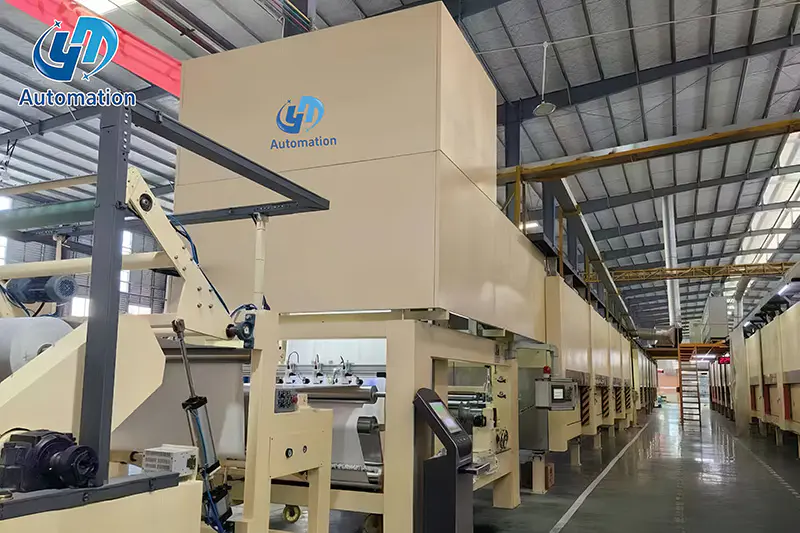
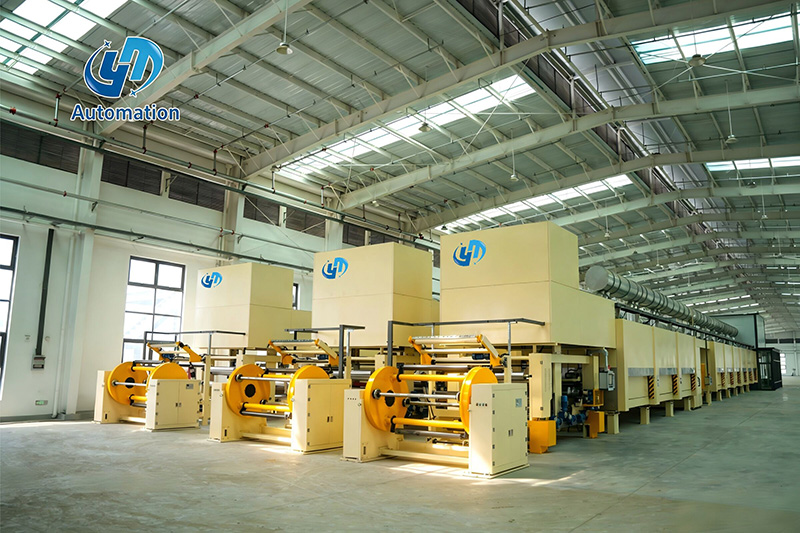
A dryer for impregnated decorative paper serves the critical purpose of removing carrier solvent from resin-saturated paper and advancing the resin cure to the precise B-stage (partial cure) state needed for downstream lamination. After a decorative or overlay paper passes through the resin bath and squeeze rolls on an impregnation line, it carries excess water or solvent that must be evaporated, and the resin must be partially cross-linked — neither too wet (which causes sticking and incomplete bonding) nor too cured (which prevents proper flow and adhesion during hot pressing). The dryer controls both of these outcomes simultaneously across the full width of the paper web, at production speeds of up to 80 to 200 meters per minute.
Melamine-formaldehyde and urea-formaldehyde resins used in decorative paper impregnation are water-based solutions. After coating, the paper carries 30 to 50% residual moisture (relative to paper weight) that must be reduced to a target volatile content — typically 5 to 8% for standard lamination applications. The dryer's heated airflow evaporates this water from both paper surfaces simultaneously. Moisture removal rate is controlled by air temperature, air velocity, and web speed — all of which must be balanced to achieve uniform evaporation without scorching the paper surface or causing uneven shrinkage.
As moisture evaporates, the resin temperature rises and cross-linking reactions begin — advancing the resin from its liquid A-stage to the partially cured B-stage. B-stage resin is dry to the touch, handleable, and cuttable, but still contains sufficient uncured reactive groups to flow under heat and pressure during hot pressing, bonding permanently to the substrate (MDF, particleboard, or plywood). The dryer's temperature profile must advance the cure to the correct degree — measured as reactivity or "flow" — without overshooting into a fully cured (C-stage) state where no further bonding can occur.
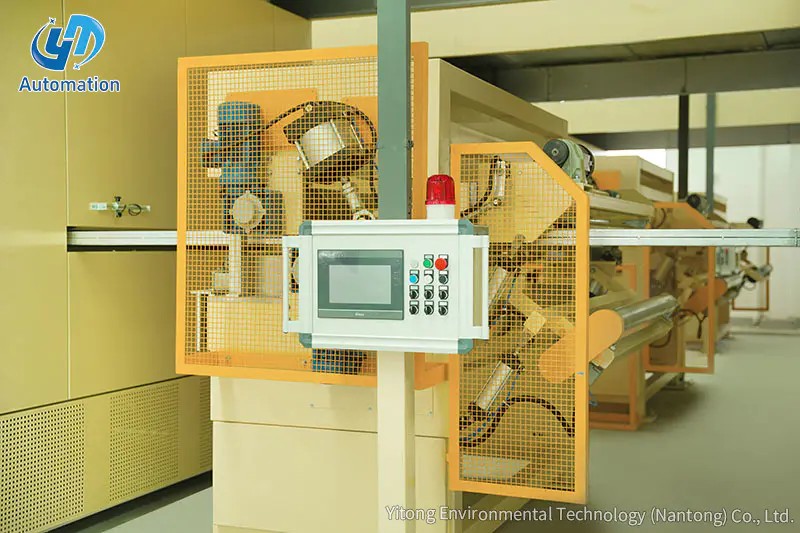
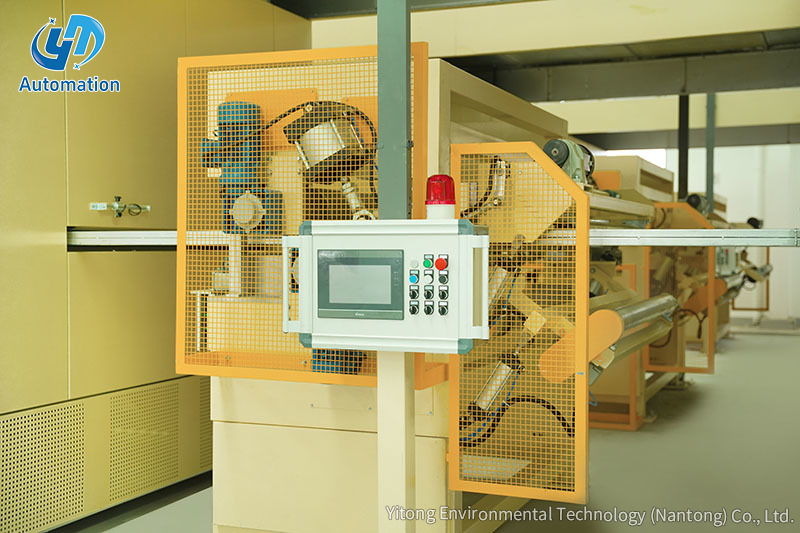
Multi-zone dryer ovens allow different temperatures in different sections of the dryer — a higher-temperature zone for initial moisture removal, a controlled lower-temperature zone for final cure advancement — giving operators precise control over the final B-stage condition of the paper.
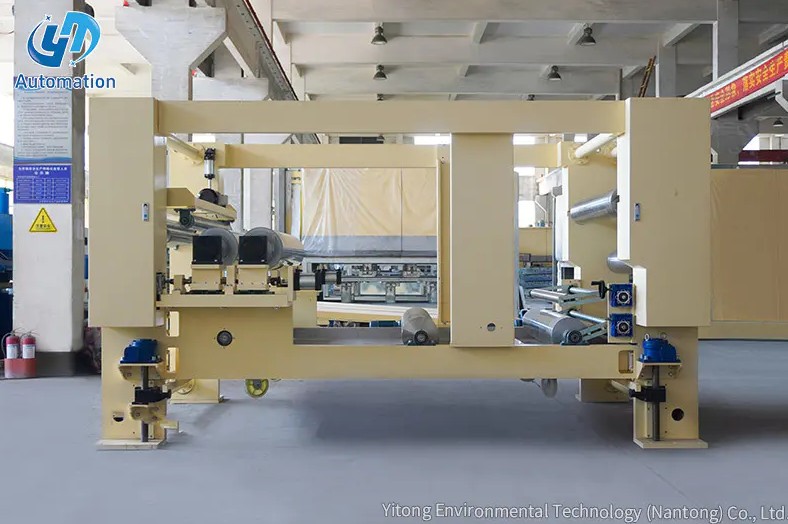
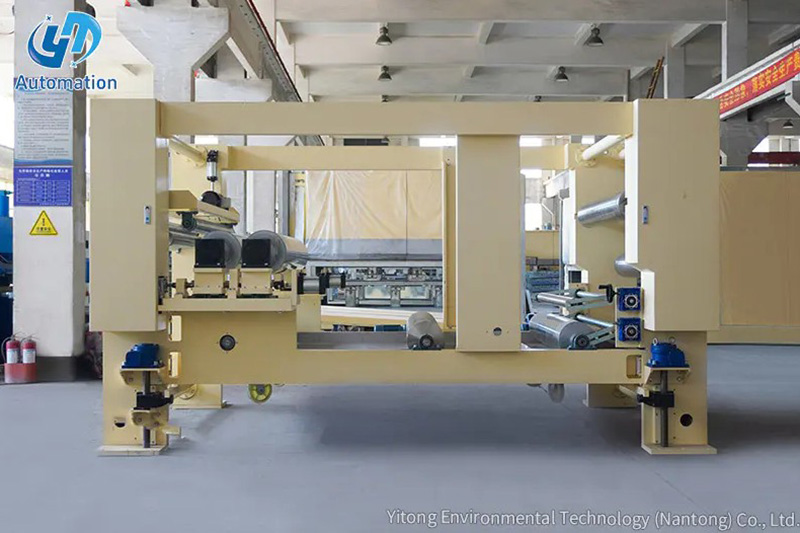
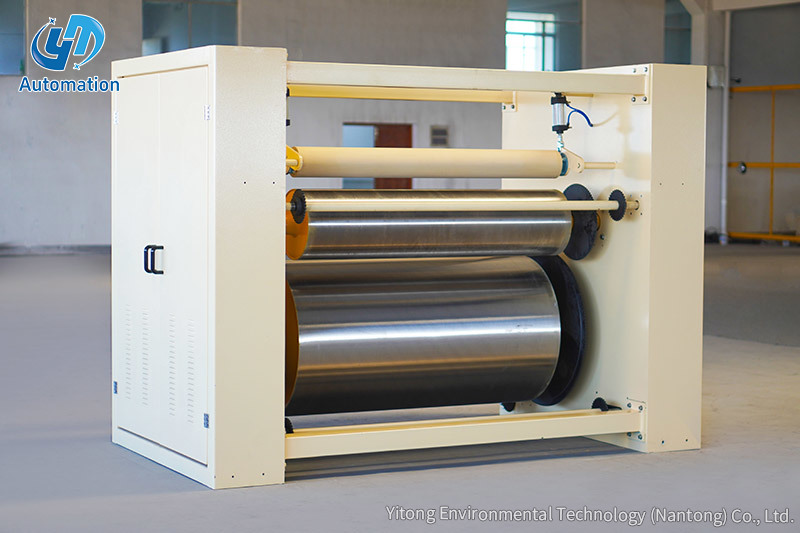
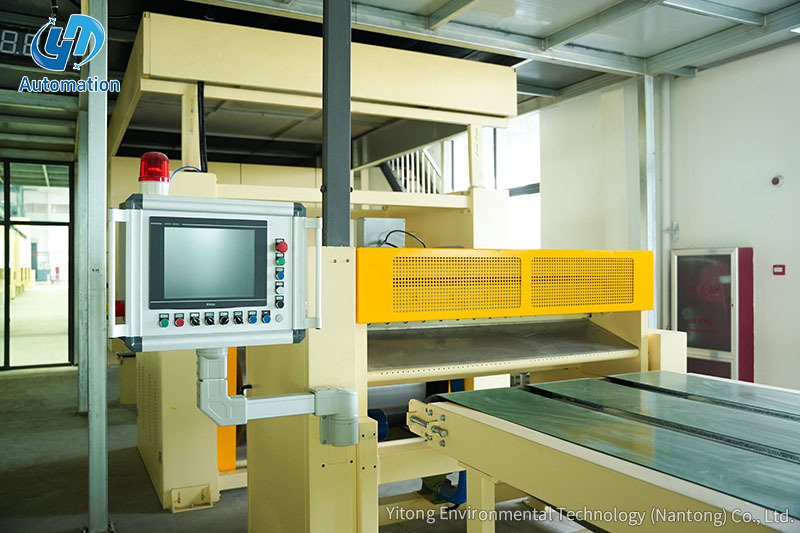
The dryer must transport the fragile, resin-saturated paper web through the oven at consistent tension without breaking or wrinkling it. Tension control systems — coordinated between the entry and exit drives — maintain web tension within a tight tolerance throughout the drying zone. Air flotation dryers (which support the web on cushions of heated air without contact) are used for delicate papers that cannot tolerate roller contact during the wet, tacky phase before full B-stage is achieved.
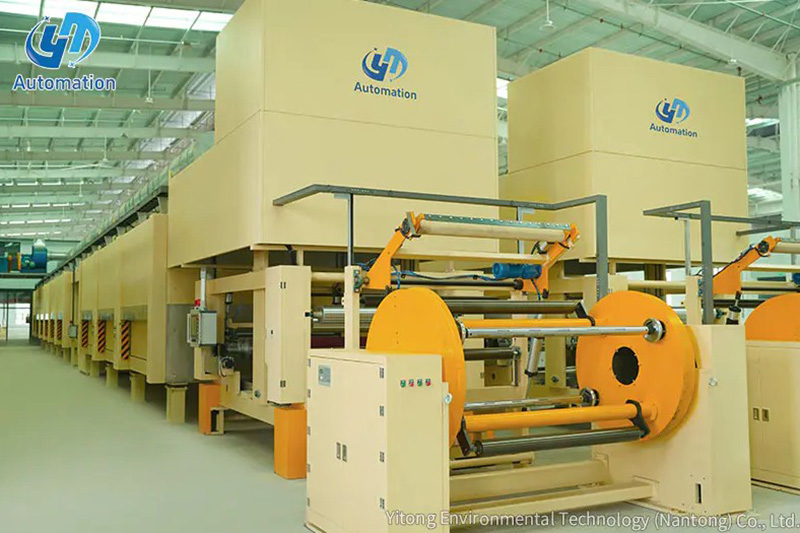
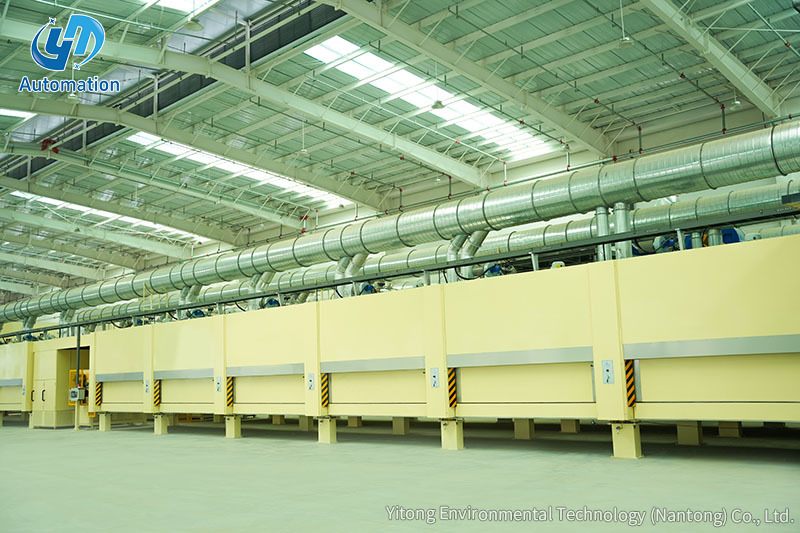
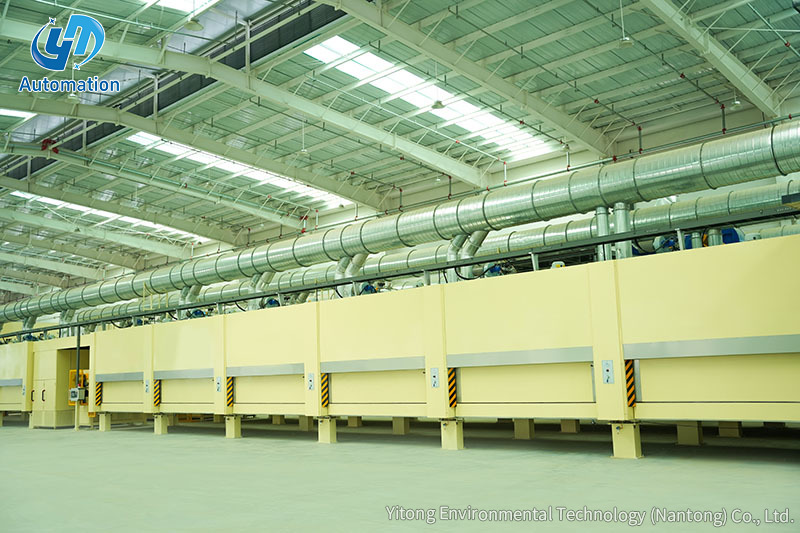
The external casing of an impregnated paper dryer is constructed from high-tensile steel plate and structural section steel, providing the rigidity to maintain dimensional stability across the full oven length — which may span 15 to 40 meters for production lines operating at high speeds. The steel shell is lined with mineral wool or other thermal insulation to minimize heat loss and maintain oven temperature uniformity. Internal air ducts and channels are welded from galvanized sheet steel (typically 2 mm thickness) to resist the corrosive combination of heat, moisture, and formaldehyde vapors present inside the oven during operation.
Recirculating hot air is the primary heat transfer medium. A thermal motor — commonly rated at 7.5 kW or higher, operating at 1,450 rpm — drives centrifugal fans that circulate heated air through the oven at controlled velocity. The fan draws air through a heat exchanger (steam, thermal oil, or gas-fired depending on plant infrastructure), heats it to the target temperature, and directs it through nozzle arrays above and below the paper web. Return air passes back through the heat exchanger for reheating, with a controlled proportion exhausted to remove evaporated moisture and formaldehyde vapors.
The air volume delivered to the paper web is not fixed — it is adjusted during start-up and operation to suit the paper grade, line speed, and resin type being processed. Gradual air volume increase during start-up is essential: bringing a fresh paper leader through the oven under full airflow risks web breakage from the turbulent air before tension is fully established. Variable-frequency drive (VFD) controls on the fan motors allow smooth, controlled ramp-up of airflow from minimum to production level as the paper web stabilizes.
Modern dryers divide the oven into independently controlled temperature zones — typically 3 to 6 zones from entry to exit. Temperature in each zone is monitored by thermocouple sensors and controlled by PLC-driven actuators on the heat supply valves. This zonal control allows operators to optimize the temperature profile for different paper weights, resin concentrations, and line speeds — achieving consistent B-stage quality across all production conditions.
| Quality Parameter | Typical Target Range | Effect of Deviation |
|---|---|---|
| Volatile content (VC) | 5–8% (typical) | Too high: blistering in press; too low: poor flow, delamination |
| Reactivity (flow) | Per product specification | Over-cured: no bonding; under-cured: squeeze-out, contamination |
| Cross-direction uniformity | VC variation less than 1% | Uneven pressing, color variation, surface defects |
| Paper surface condition | No scorching or marking | Visible surface defects in finished laminate |
Contact Us
Recommended Products
Let’s Get In
Touch
Yitong Environmental Technology (Nantong) Co., Ltd is a manufacturer specializing in impregnation equipment.


Contact Us
Phone: 13073202297 / 13023568111(WhatsApp/Wechat)
Email: [email protected] / [email protected]
Add:No.369, Nanhai Road, Tongzhou Bay, Nantong, Jiangsu, China


 English
 中文简体
中文简体
 русский
 عربى
عربى