Content
The fundamental difference between an impregnation line and a coating production line lies in how the treatment medium is applied to the substrate and how deeply it penetrates. An impregnation line saturates the substrate — typically a porous material such as paper, fabric, fiber, or foam — by fully immersing it in or driving a liquid resin, chemical, or functional solution into its internal structure so that the treatment permeates throughout the material's cross-section. A coating production line, by contrast, applies a liquid or semi-solid layer exclusively to the surface of a substrate, creating a functional or decorative film on top of the material without penetrating significantly into its interior.
Both process types are followed by a drying or curing stage that converts the applied treatment into its final functional form, and both are used in continuous roll-to-roll production. However, the depth of treatment, the equipment configuration, the materials processed, and the end-use applications served are substantially different — making the choice between an impregnation line and a coating line a fundamental process engineering decision that shapes the entire production system design.
The distinction between impregnation and coating begins at the most fundamental level — the physical relationship between the treatment medium and the substrate being processed.
In an impregnation process, the substrate is passed through a bath or applicator system containing a low-viscosity liquid — typically a resin solution, chemical treatment, or functional agent — that is drawn into the substrate's porous structure by a combination of capillary action, mechanical compression, or applied pressure and vacuum. The goal is to achieve uniform saturation throughout the full thickness of the material, so that the treatment medium is distributed not just on the surface but throughout every layer of the substrate's internal network of fibers, pores, or cells.
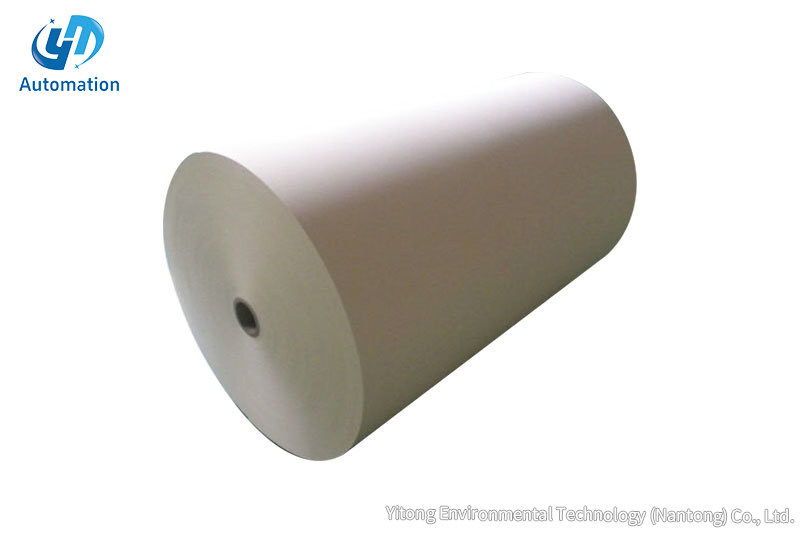
The degree of saturation is typically expressed as a resin pickup or add-on percentage — the weight of treatment medium absorbed as a proportion of the substrate's original dry weight. For decorative paper impregnation with melamine-formaldehyde or urea-formaldehyde resins, resin add-on values are commonly in the range of 80–130% by weight, meaning the paper absorbs nearly its own weight in resin. This level of internal saturation transforms the substrate's mechanical, chemical, and functional properties throughout its entire cross-section.
In a coating process, the treatment medium — which may be a paint, lacquer, adhesive, barrier layer, functional film, or any of hundreds of other coating materials — is applied specifically to one or both surfaces of the substrate using a precision applicator such as a roll coater, slot die, blade, or spray system. The coating is designed to remain on the substrate's surface rather than penetrating into its interior, forming a discrete layer of controlled and uniform thickness that provides properties — color, gloss, barrier function, adhesion, protection — that derive from the coating material itself rather than from any chemical interaction with the substrate's internal structure.
Coating thickness is typically expressed in micrometers (µm) of dry film thickness. Surface coatings on paper and board products are commonly 5–30 µm per side; functional barrier coatings may be as thin as 1–5 µm; heavy protective coatings on metal or fabric substrates may reach 50–200 µm or more. In all cases, the coating occupies only the surface zone of the composite structure.
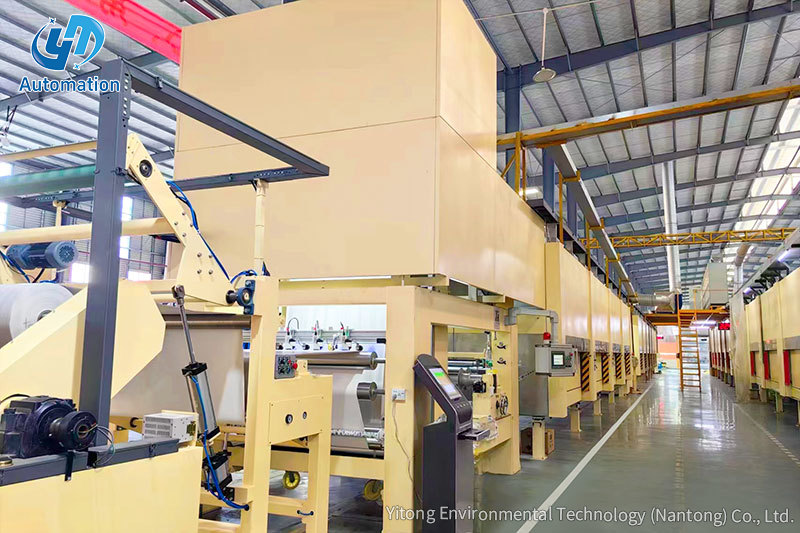
The different objectives of impregnation and coating are reflected in fundamentally different equipment configurations. While both line types share some common elements — unwinding and rewinding systems, drying ovens, tension control, and process automation — the treatment sections are designed around very different engineering principles.
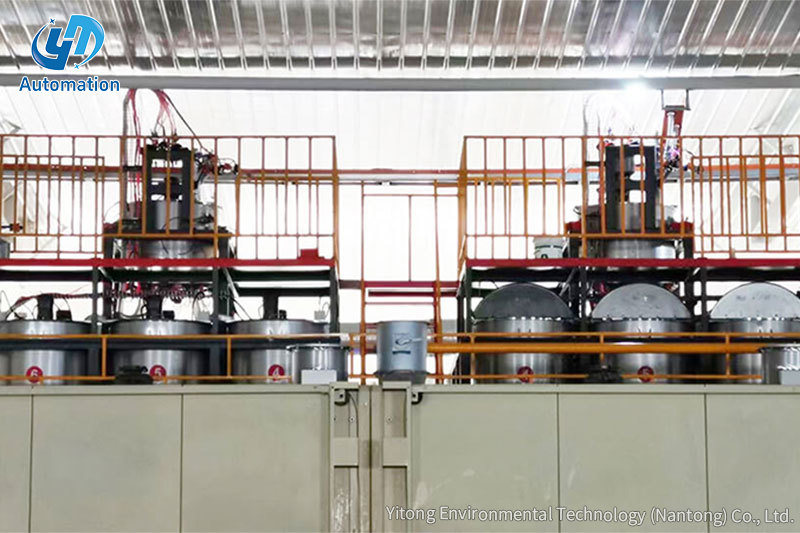
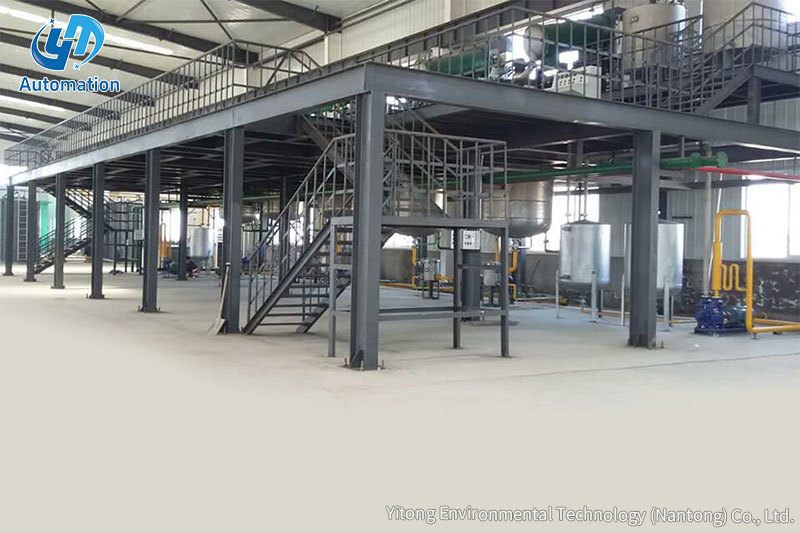
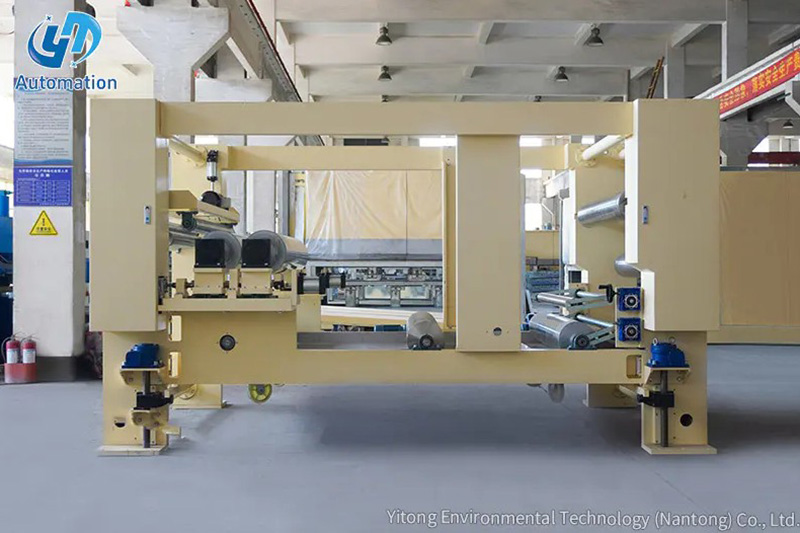
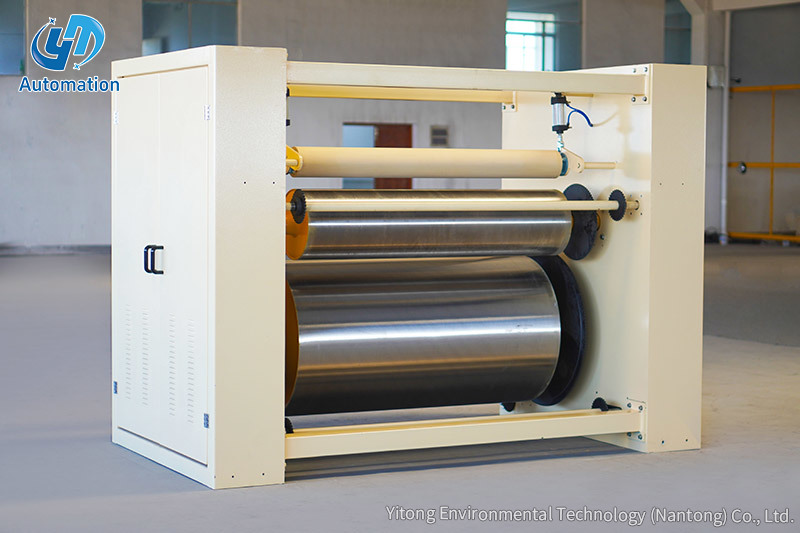
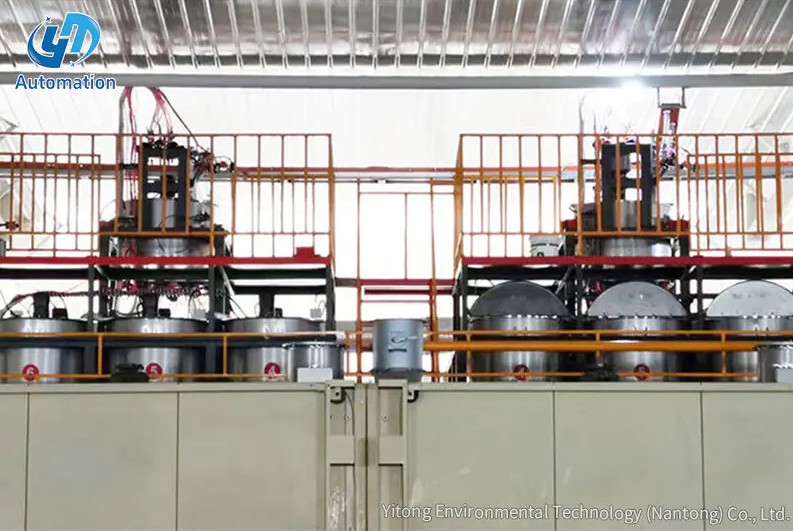
The core of an impregnation line is the impregnation bath or saturation tank, through which the substrate passes and in which the treatment liquid permeates the material. Key equipment elements include:
Coating lines use precision applicator technology designed to deposit a metered, uniform film of coating material on the substrate surface with minimum penetration into the substrate. Common coating application systems include:
Both impregnation lines and coating lines incorporate drying or curing systems to convert the applied treatment into its final functional form. However, the drying requirements are meaningfully different between the two process types due to the different amounts of treatment medium involved and the different curing chemistry.
Because impregnation saturates the substrate throughout its thickness, the amount of solvent or water that must be removed during drying is proportionally much greater than in a surface coating application. A paper substrate with 100% resin add-on may carry twice its dry weight in liquid resin solution entering the dryer. The drying oven must therefore have sufficient thermal capacity to evaporate this substantial liquid load while simultaneously bringing the resin to a partially or fully cured state.
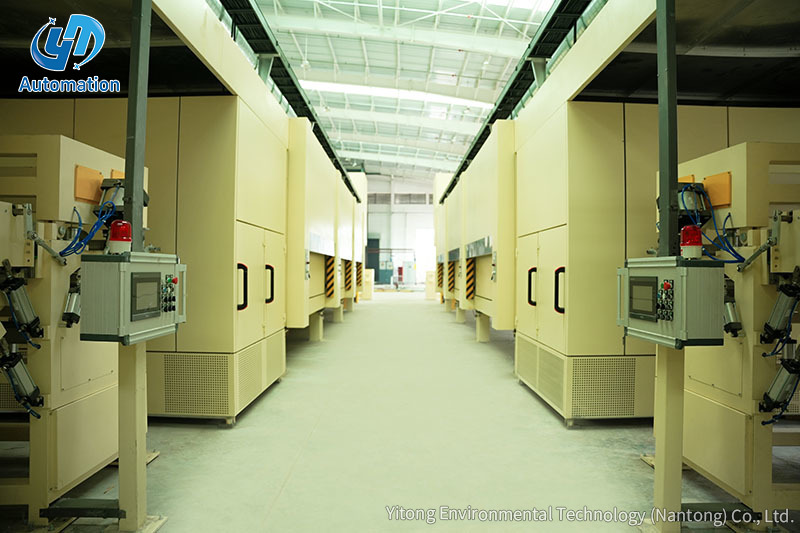
For thermosetting resin impregnation — such as melamine, urea-formaldehyde, or phenolic resins used in decorative paper and technical laminate production — drying is carefully controlled to achieve a specific residual volatile content (typically 4–8% for decorative paper) and a defined degree of resin pre-cure (B-stage). Too much heat causes over-cure and the material becomes non-bondable; too little leaves excessive volatiles that cause blistering during subsequent lamination pressing. This tight process window requires multi-zone ovens with precise independent temperature control in each zone.
Surface coating lines dry or cure a thinner layer of material, but the curing chemistry and temperature requirements depend on the specific coating system. Common curing methods on coating lines include:
The choice between an impregnation line and a coating line is largely determined by the nature of the substrate being processed and the degree of treatment penetration required to achieve the target end-product properties.
| Substrate | Typical Treatment Medium | Process Type | End Product |
|---|---|---|---|
| Decorative paper | Melamine or urea-formaldehyde resin | Impregnation | Laminate flooring, furniture surfaces, HPL |
| Kraft paper / core paper | Phenolic resin | Impregnation | HPL core layers, electrical laminates |
| Glass fiber fabric | Epoxy or polyester resin | Impregnation | PCB prepreg, composite materials |
| Steel / aluminum coil | Polyester, PVDF, epoxy paint | Coating | Pre-painted metal for construction, appliances |
| Plastic film (PET, PP, PE) | Barrier, adhesive, or functional coating | Coating | Packaging film, optical film, release liner |
| Paper / paperboard | Clay coating, lacquer, barrier layer | Coating | Coated printing paper, food packaging board |
| Nonwoven fabric | Latex binder, resin, or functional agent | Impregnation or Coating | Technical textiles, filtration, geotextiles |
| Foam sheet | Fire retardant, antimicrobial solution | Impregnation | FR foam for furniture, acoustic panels |
The physical properties of the treatment medium are substantially different for impregnation and coating applications, reflecting the different mechanisms by which each process applies the material to the substrate.
For effective impregnation, the treatment liquid must have sufficiently low viscosity to penetrate the substrate's pore structure under the mechanical and capillary forces available in the process. Impregnation resins are typically diluted with water or solvent to achieve viscosities in the range of 20–200 mPa·s (centipoise) — comparable to light machine oil or a thin syrup — which allows them to flow freely through paper fibers or fabric structures within the brief dwell time available in a continuous production line.
Resin concentration is expressed as solids content (percentage by weight of dry resin in solution), typically 45–65% solids for melamine-formaldehyde systems used in decorative laminate production. The resin must also have an appropriate pH, viscosity stability over time, and compatibility with the substrate fibers to ensure consistent uptake across the full width and along the full length of a production run.
Surface coatings cover a much wider range of viscosities — from very low-viscosity (10–50 mPa·s) gravure printing inks and thin functional coatings to high-viscosity (5,000–50,000 mPa·s) adhesives, sealants, and plastisol coatings — because the coating applicator is engineered to meter and apply each specific viscosity range precisely. High-viscosity coatings are deliberately formulated to resist penetration into the substrate, staying on the surface as a discrete layer.
Solids content in surface coatings varies widely: high-solids solvent-based coatings may contain 60–80% solids, while waterborne coatings for paper and packaging are often 50–70% solids. UV-curable coatings can be 100% solids with no carrier solvent or water at all — the entire applied wet film converts to dry coating during curing, simplifying solvent handling and emission control.
The different treatment mechanisms of impregnation and coating produce characteristically different outcomes in the finished product. Understanding these performance differences is essential for selecting the correct process for a given application.
Because the treatment medium saturates the substrate throughout its thickness, impregnation fundamentally transforms the material's bulk properties — not just its surface. Key outcomes include:
Surface coatings provide properties that derive from the coating material itself and are concentrated at the interface between the product and its environment — which is exactly where many of the most important product functions are needed:
Within impregnation line technology, an important sub-distinction exists between one-stage and two-stage impregnation processes — a distinction that significantly affects the final product's properties and the line's process flexibility.
A one-stage impregnation line passes the substrate through a single treatment bath containing a single resin or treatment formulation, followed by a single drying and curing oven section. This configuration is simpler, more economical to operate, and appropriate where the substrate requires saturation with only one treatment system. One-stage lines are widely used for standard decorative paper impregnation with melamine resin, where the same resin is used to achieve both the required saturation level and the surface properties needed for subsequent lamination.
A two-stage impregnation and coating line applies two different treatment media in sequence, allowing the first stage to achieve interior saturation with a base resin while the second stage applies a different treatment to the surface or adjusts the resin profile in the substrate's cross-section. This configuration provides much greater process flexibility and enables product properties that cannot be achieved with a single-stage process:
Two-stage lines represent a category that bridges the distinction between pure impregnation and pure coating — they combine full substrate saturation with precise surface treatment, serving the most technically demanding specialty laminate and composite material applications.
The following table summarizes the key differences between impregnation lines and coating production lines across the most important technical and operational dimensions.
| Parameter | Impregnation Line | Coating Production Line |
|---|---|---|
| Treatment penetration depth | Full cross-section of substrate | Surface only (typically 1–200 µm) |
| Primary applicator type | Dip bath / impregnation trough | Roll coater, slot die, blade, gravure |
| Treatment medium viscosity | Low (20–200 mPa·s) for penetration | Wide range (10–50,000+ mPa·s) |
| Treatment add-on level | High (50–150% by weight) | Low (1–200 µm dry film thickness) |
| Substrate porosity required | Essential (porous structure needed) | Not required (dense substrates acceptable) |
| Typical substrates | Paper, fabric, fiber, foam, nonwoven | Metal, film, board, fabric, paper |
| Properties modified | Bulk mechanical, chemical, structural | Surface appearance, barrier, function |
| Drying energy demand | High (large liquid load to evaporate) | Moderate to low (thin liquid layer) |
| Curing type | Partial cure (B-stage) or full cure | Full cure (hot air, UV, IR, EB) |
| Typical line speed | 20–80 m/min | 20–200+ m/min |
| Key process control parameter | Resin add-on %, residual volatiles %, B-stage | Dry film thickness, gloss, color, cure level |
Within impregnation line design, the orientation of the substrate path through the drying oven is a significant engineering choice that affects the line's footprint, suitability for different substrate types, and the uniformity of the drying profile achieved.
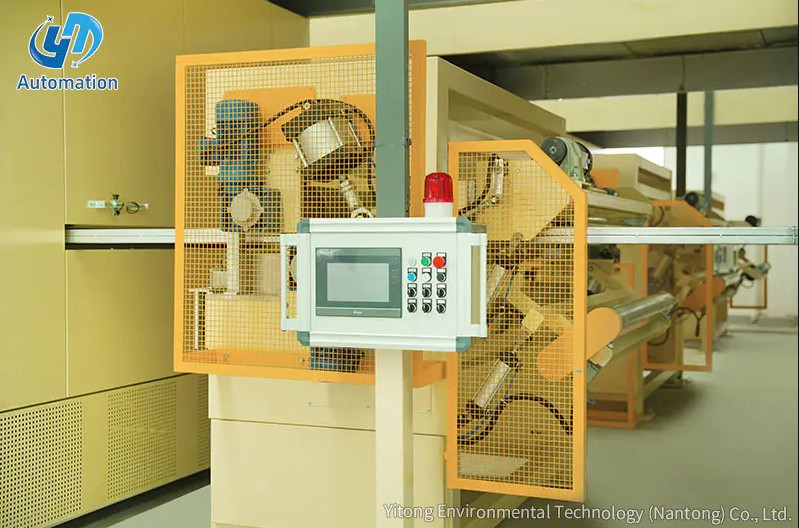
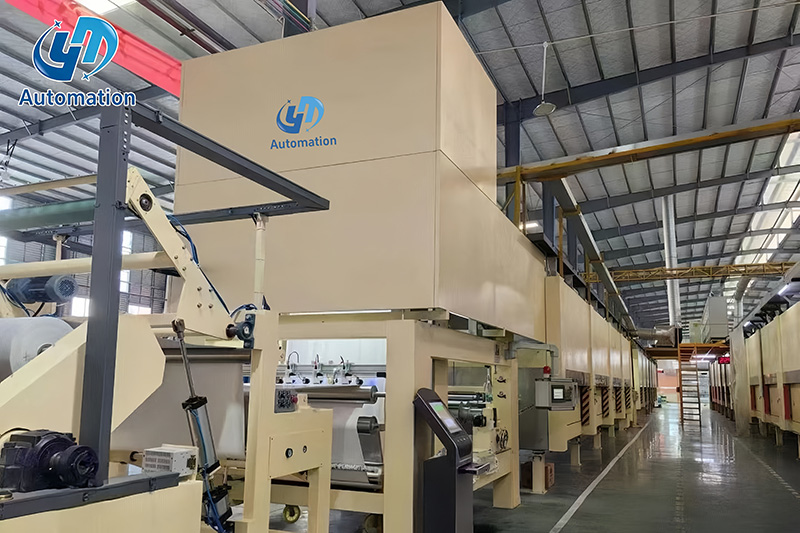
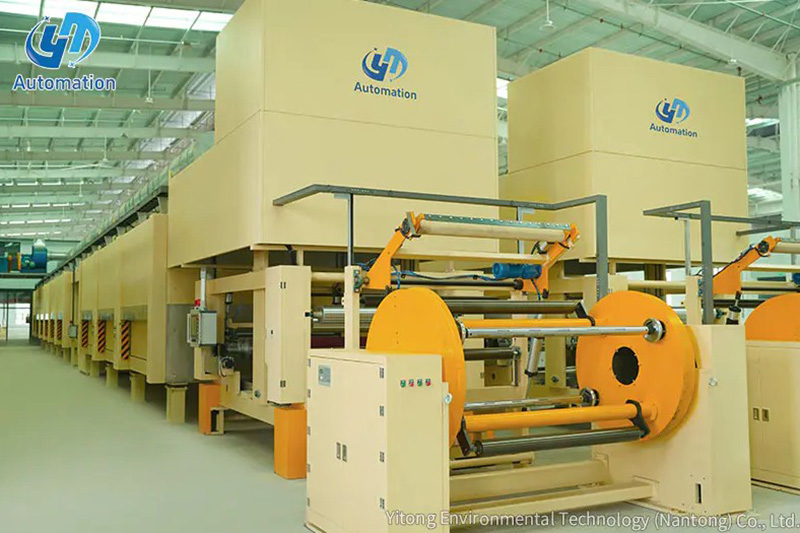
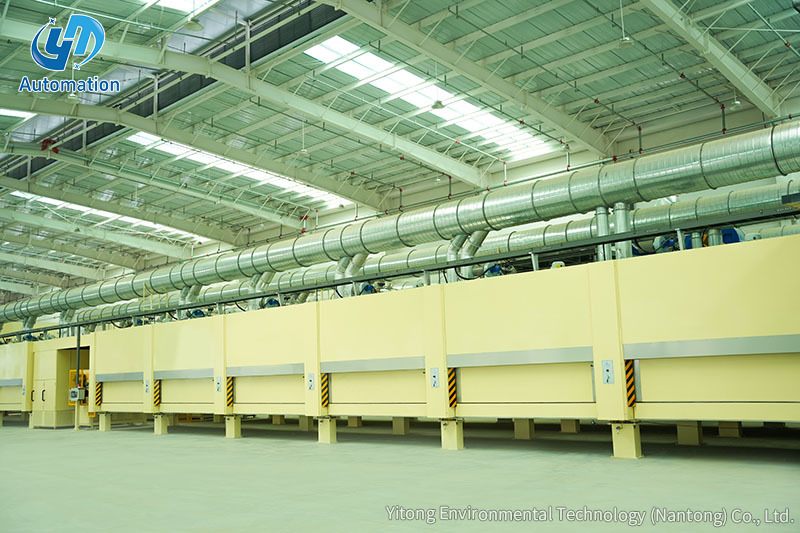
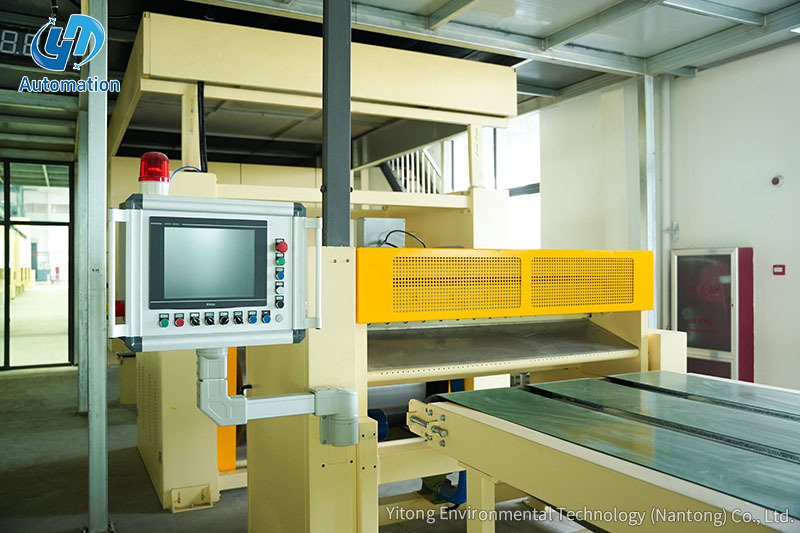
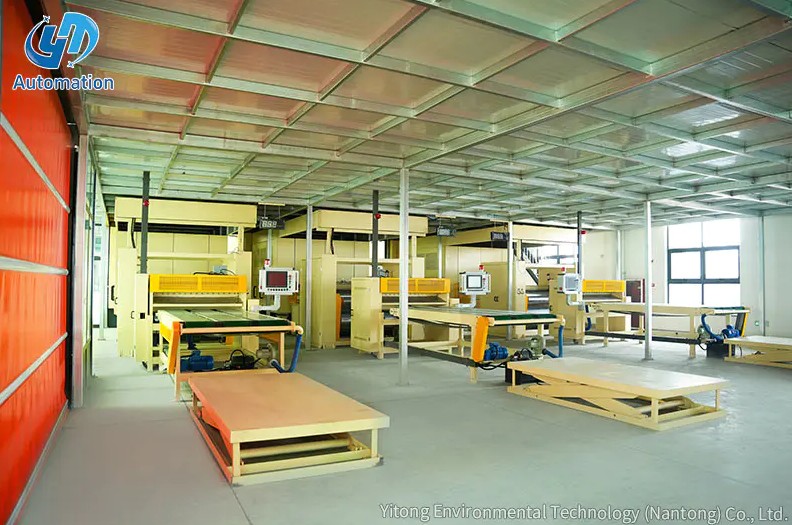
In a horizontal impregnation line, the impregnated substrate travels horizontally through the drying oven, supported on rolls or a flotation system. The horizontal path allows longer oven residence times within a given building height and is well-suited to heavier substrates that might sag or distort if held vertically. Horizontal lines are the most common configuration for decorative paper impregnation and technical fabric treatment, and they offer excellent accessibility for maintenance and troubleshooting.
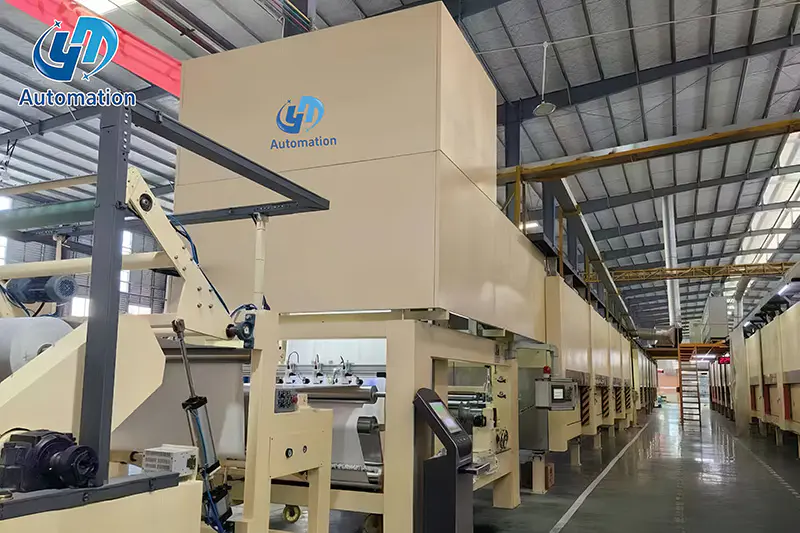
In a vertical impregnation line, the substrate travels upward through a vertical oven section in a series of loops supported by horizontal rolls — a configuration known as a festoon or loop dryer. Vertical lines achieve a compact floor footprint while providing very long drying paths for applications requiring extended residence time, and they are particularly suited to lightweight, flexible substrates such as thin decorative papers where the substrate's own weight provides the tension needed to maintain flat, wrinkle-free passage through the oven.
The vertical gluing and drying line — a configuration used for applying adhesive or glue layers to paper and board in a vertical dryer — is a specialized variant that combines elements of both impregnation and coating technology to achieve specific bonding and laminating product requirements.
The selection between an impregnation line and a coating production line for a given manufacturing application is not primarily a matter of preference — it is determined by the physical requirements of the product being manufactured. The following decision framework identifies the key questions that direct the selection:
Yitong Environmental Technology (Nantong) Co., Ltd. is a manufacturer specializing in the design and manufacturing of impregnation coating and drying equipment. The company's product portfolio covers the full range of industrial impregnation and drying line configurations, including:
The company's flagship YT series horizontal impregnation coating and drying lines incorporate multiple technological innovations that have been successfully awarded national patents. Developed through continuous learning from domestic and international industry peers and incorporating the most advanced available process technologies, the YT series lines offer outstanding advantages in energy efficiency, production efficiency, and automation level — qualities that have earned consistent recognition from customers in both domestic and international markets.
With deep expertise in the engineering of both impregnation and coating process systems, Yitong Environmental Technology is well positioned to advise on the correct line type for specific production requirements and to supply complete, proven line solutions — from single-stage impregnation lines for standard applications to sophisticated two-stage hybrid systems for the most demanding specialty product manufacturing needs.
Contact Us
Recommended Products
Let’s Get In
Touch
Yitong Environmental Technology (Nantong) Co., Ltd is a manufacturer specializing in impregnation equipment.


Contact Us
Phone: 13073202297 / 13023568111(WhatsApp/Wechat)
Email: [email protected] / [email protected]
Add:No.369, Nanhai Road, Tongzhou Bay, Nantong, Jiangsu, China


 English
 中文简体
中文简体
 русский
 عربى
عربى