Content
The primary purpose of using an impregnation line is to saturate a substrate — typically paper, fabric, glass fiber, or nonwoven material — with a liquid resin, adhesive, or chemical compound, then cure or dry that coating under controlled conditions to produce a reinforced, functional composite material. The result is a finished product with significantly improved mechanical strength, moisture resistance, electrical insulation, flame retardancy, or surface finish properties that the uncoated base material alone cannot achieve. Impregnation lines are the backbone of manufacturing processes for decorative laminates, circuit boards, friction materials, filtration media, composite panels, and a wide range of industrial substrates.
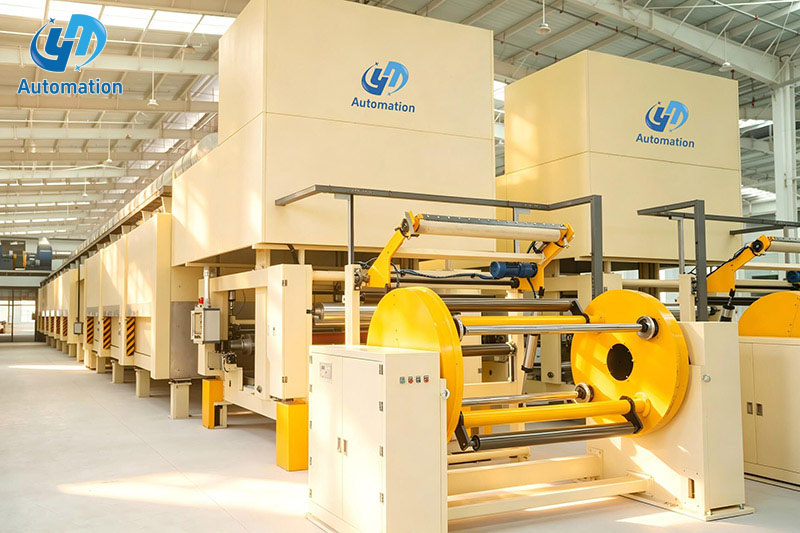
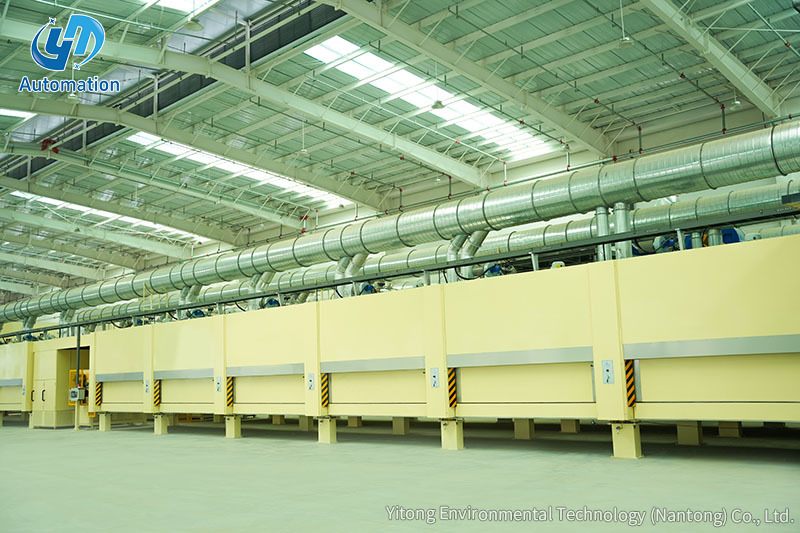
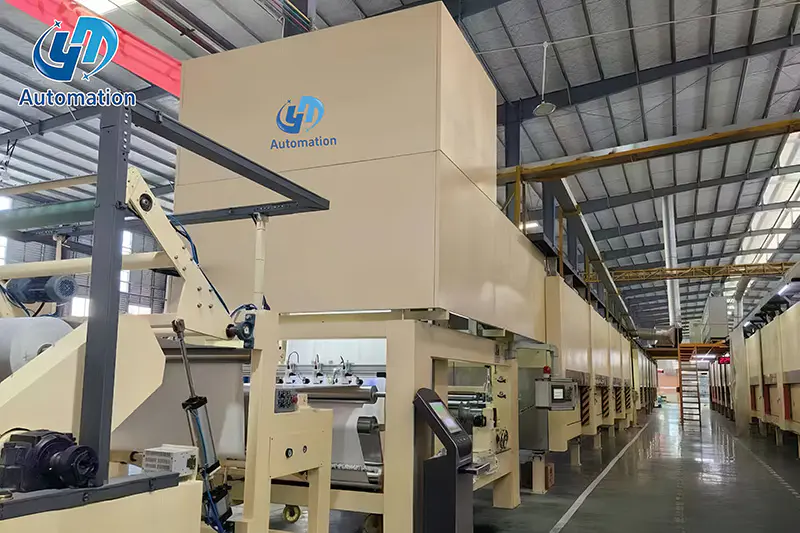
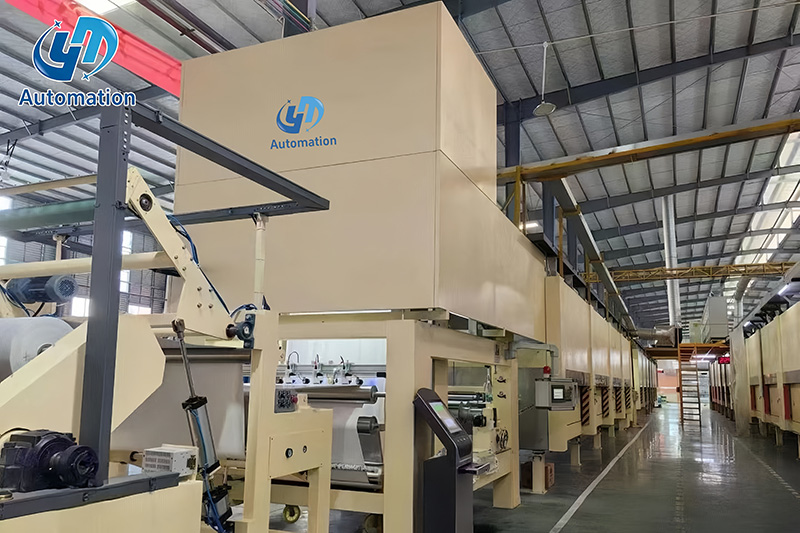
An impregnation line is a continuous, inline production system that feeds a raw substrate through a series of process stages — typically resin bath immersion or coating application, controlled squeeze-out or metering, and a drying or curing oven — to produce a uniformly impregnated material at consistent quality and throughput.
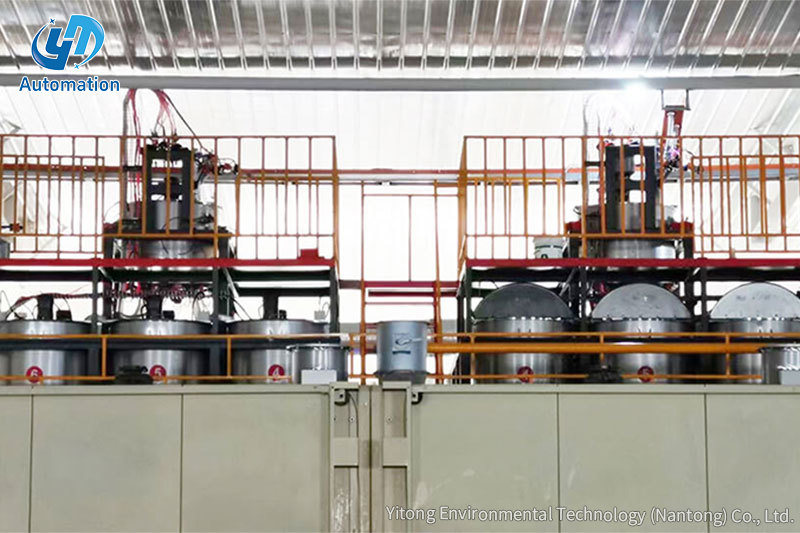
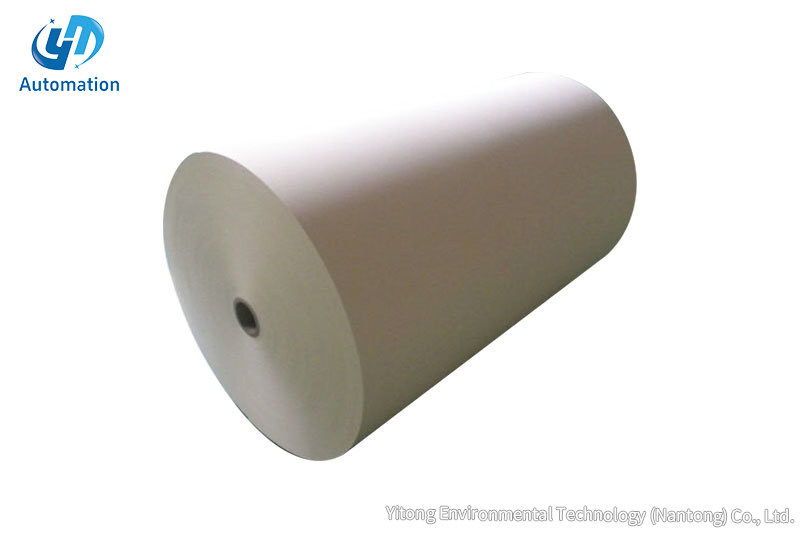
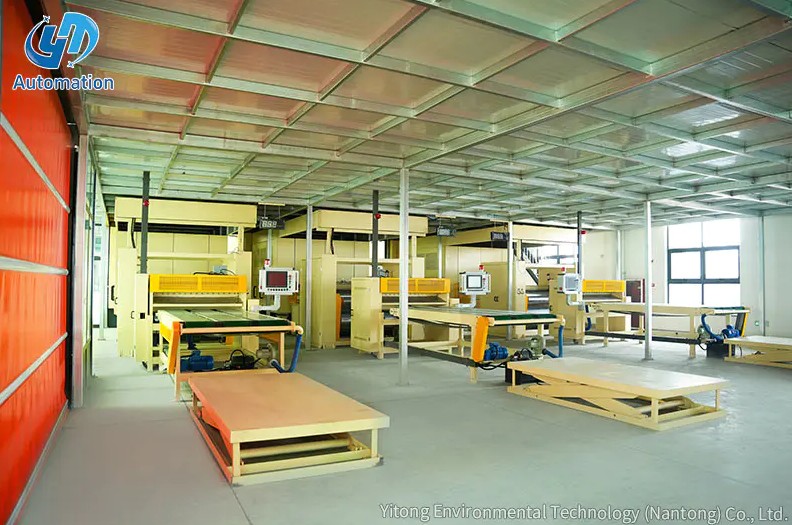
The substrate enters the line from an unwind stand, passes through the impregnation zone where the liquid resin penetrates into the material structure, is metered to a specified resin content (typically expressed as a percentage of total dry weight), and then travels through a precisely controlled drying tunnel where solvents evaporate and the resin partially or fully cures. The finished material exits as a prepreg, impregnated paper, coated fabric, or semi-finished laminate ready for the next stage of production.
Modern impregnation lines are engineered for high throughput, tight resin content control, uniform coating distribution, and energy-efficient drying — all of which directly determine the quality and consistency of the end product.
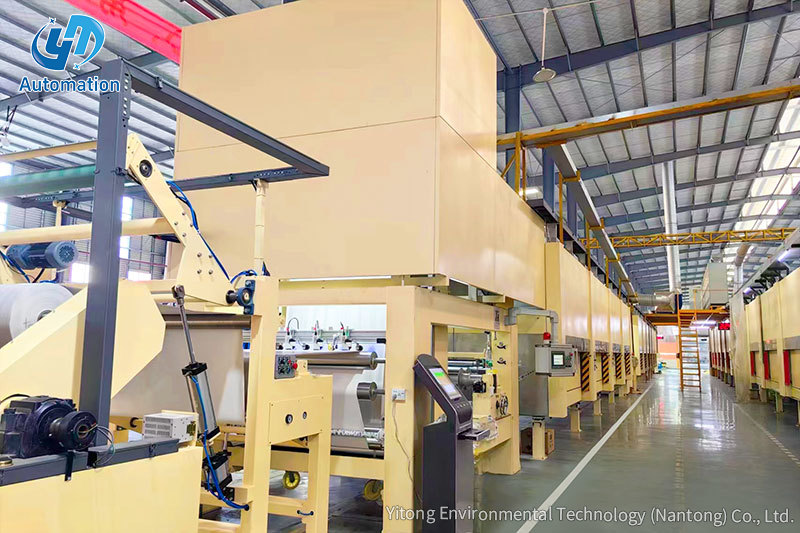
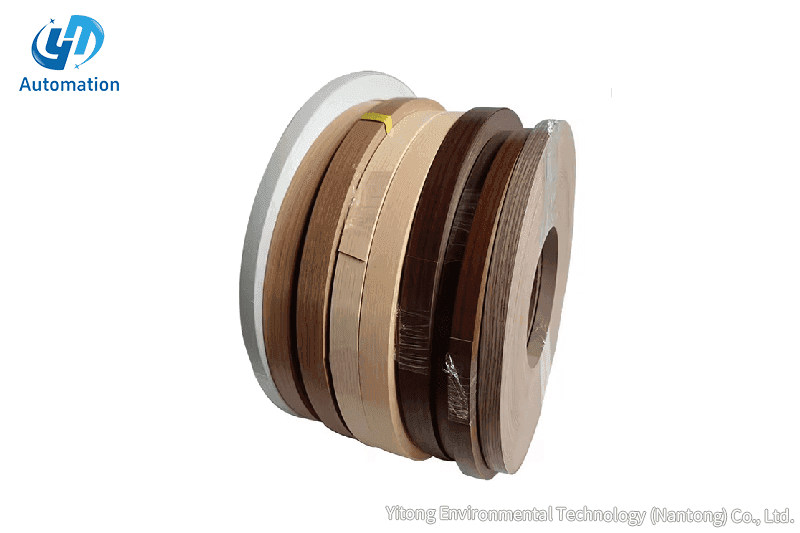
In the furniture and flooring industry, impregnation lines are used to saturate decorative papers and overlay papers with melamine-formaldehyde (MF) or urea-formaldehyde (UF) resins. The impregnated papers are then pressed under heat onto wood-based panels (MDF, particleboard, plywood) to create the durable, scratch-resistant laminate surfaces found on kitchen cabinets, flooring, office furniture, and wall panels.
Resin content in decorative paper impregnation is tightly controlled — typically between 120% and 180% of the paper dry weight — because under-impregnation leads to delamination and surface defects, while over-impregnation causes excessive resin squeeze-out during pressing, resulting in quality rejects and waste.
In the electronics industry, glass fiber woven fabrics are impregnated with epoxy resin to produce prepreg (pre-impregnated composite fiber), which is then stacked and pressed to manufacture the insulating layers of multilayer printed circuit boards. The impregnation line must achieve precise resin content uniformity across the full web width — variations of more than ±2% in resin content across the width can cause differential flow during pressing, leading to board thickness deviation and electrical performance issues.
Air and liquid filtration papers are impregnated with phenolic resins or acrylate binders to improve their wet strength, rigidity, and chemical resistance. Without impregnation, filter papers would collapse or deform under operating pressure or when exposed to liquids. The impregnation line ensures the binder is evenly distributed through the full cross-section of the nonwoven, not just on the surface — a distinction critical to performance.
Woven or nonwoven fiber substrates for automotive brake pads, clutch facings, and industrial friction components are impregnated with phenolic resin formulations on impregnation lines. The resin provides the matrix that binds friction modifier particles, controls heat resistance, and gives the component its structural integrity under high thermal and mechanical stress. Friction material impregnation lines must handle high-viscosity resin systems while maintaining uniform penetration depth.
Carbon fiber, aramid fiber, and glass fiber fabrics are impregnated with epoxy, bismaleimide, or thermoplastic resin systems on specialized impregnation lines to create structural prepregs for aerospace, automotive, sporting goods, and wind turbine blade manufacturing. These applications demand the most stringent resin content control and uniformity standards of any impregnation process, as structural composite components are engineered to precise fiber volume fractions.
The paper and fabric backings used in sandpaper and coated abrasive products are impregnated with resin to improve their tensile strength and resistance to tearing during use. A properly impregnated backing can increase the tensile strength of paper by 3–5 times compared to the untreated substrate, enabling higher material removal rates and longer abrasive life.
Understanding what happens at each stage of an impregnation line clarifies why each element is essential to producing consistent, high-quality impregnated material.
| Stage | Purpose | Key Control Variable |
|---|---|---|
| Unwind & Tension Control | Feed substrate without distortion | Web tension (N/m) |
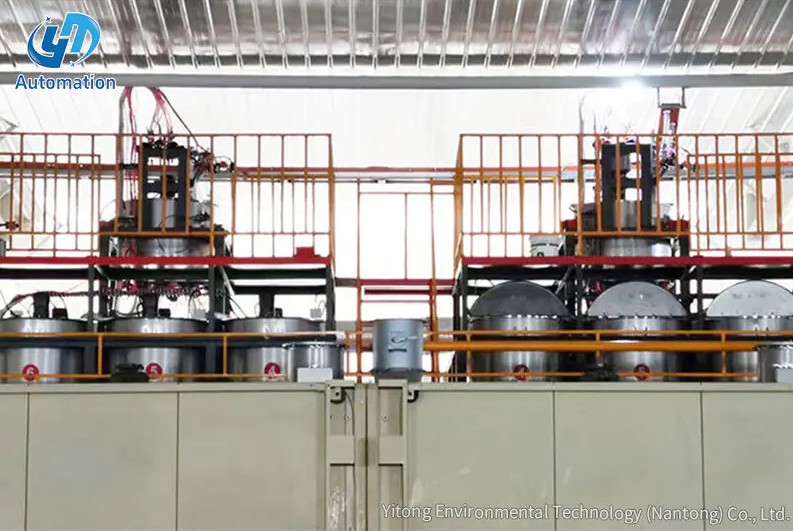
| Resin Bath / Coating Head | Saturate substrate with resin | Resin viscosity, immersion time |
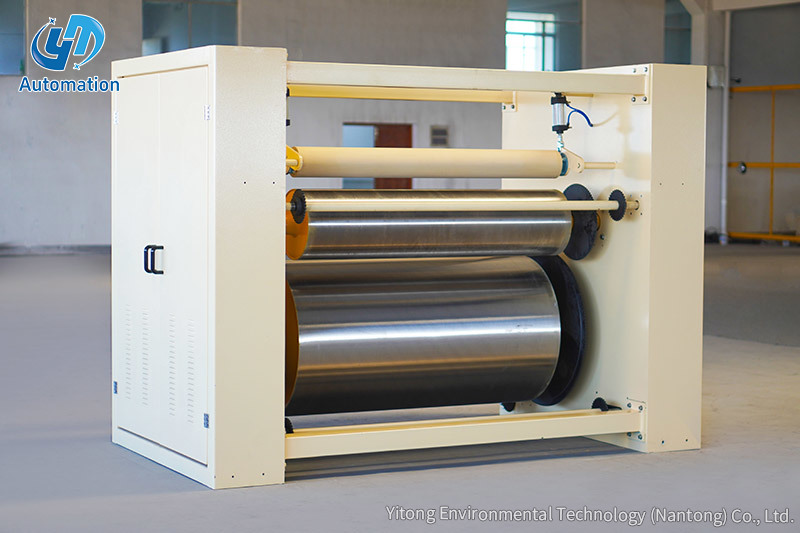
| Metering Rolls | Set final resin content level | Nip pressure, roll gap |
| Multi-Zone Drying Oven | Evaporate solvent, advance cure | Temperature profile, airflow, dwell time |
| Cooling Zone | Stabilize material before winding | Exit temperature |
| Rewind / Cut / Stack | Format product for downstream use | Roll tension, cut length accuracy |
Different production requirements and substrate types call for different impregnation line configurations. The choice of line type directly affects achievable resin content, uniformity, throughput speed, and the range of substrates and resins that can be processed.
A single-stage impregnation line passes the substrate through one resin bath and one drying oven in a single continuous pass. This configuration is suited for substrates requiring moderate resin content — typically 80%–150% of substrate dry weight — and for water-based or low-viscosity solvent-borne resin systems. Single-stage lines offer lower capital investment and a simpler process footprint, making them a common choice for decorative paper impregnation in furniture laminate production.
A two-stage line impregnates the substrate in a first resin bath, partially dries it, then passes it through a second resin bath and drying oven. This configuration enables higher total resin content than is achievable in a single pass, better penetration of dense substrates, two-sided coating with different resin formulations, and finer control over the resin distribution through the substrate cross-section. Two-stage lines are commonly used for glass fiber prepreg, thick nonwovens, and high-resin-content overlay papers.
In a vertical impregnation line, the substrate travels vertically through the resin bath and drying section rather than horizontally. This configuration is particularly suitable for lightweight, delicate substrates that would sag or distort if supported horizontally under the weight of a wet resin coating. Vertical lines also provide a more compact machine footprint for facilities with limited floor space. They are widely used for tissue overlay papers and lightweight decorative papers.
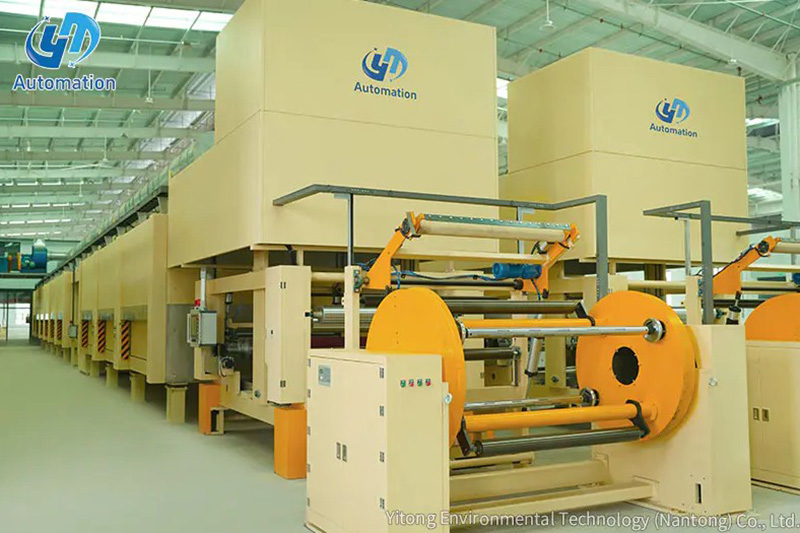
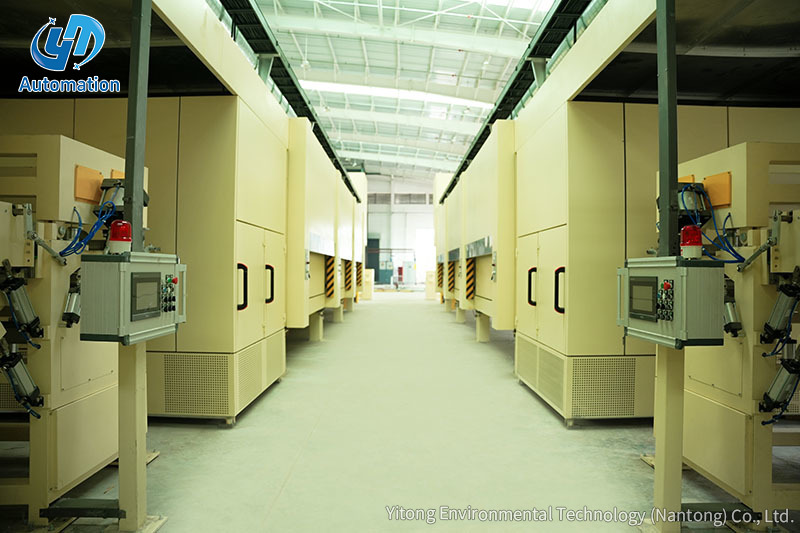
Horizontal lines are the most common configuration for medium- and heavy-weight substrates. The substrate travels horizontally through the resin bath and a tunnel oven supported by driven rollers. Horizontal lines can be designed to very long oven lengths — 30 to 80 meters or more — to achieve the necessary drying and curing dwell time at high throughput speeds. Modern horizontal impregnation lines are engineered with multi-zone hot air circulation, precise temperature control systems, and high-efficiency heat recovery systems to minimize energy consumption.
Many users focus on the impregnation zone when evaluating a line's capability, but the drying and curing oven is equally critical to the final product quality. The drying section must accomplish several things simultaneously:
Investing in a high-quality, purpose-built impregnation line delivers measurable process and product benefits compared to batch impregnation methods or older continuous line technology.
| Parameter | Batch Impregnation | Modern Continuous Impregnation Line |
|---|---|---|
| Resin Content Uniformity | ±10%–15% variation | ±2%–3% variation |
| Throughput Speed | Low (limited by batch size) | 10–80 m/min continuous |
| Energy Efficiency | Low (heat-up/cool-down cycles) | High (heat recovery systems) |
| Labor Requirement | High (manual handling) | Low (automated control systems) |
| Defect Rate | Higher (manual process variation) | Lower (PLC-controlled parameters) |
| Traceability | Difficult to achieve | Full process data logging per roll |
A well-designed impregnation line allows operators to precisely control all of the quality parameters that define the usability of the impregnated product in downstream processing. These parameters include:
The technology of continuous impregnation is not limited to one industry segment. The following industries all depend on impregnation lines as a core production process:
The operational economics of an impregnation line are dominated by energy consumption (primarily in the drying oven) and labor. Advances in impregnation line engineering over the past decade have delivered substantial improvements in both areas.
Modern impregnation line ovens incorporate heat recovery systems that capture exhaust air heat and use it to pre-heat incoming fresh air. This approach can reduce oven energy consumption by 20%–40% compared to non-recovery designs. Variable-frequency drives on circulation fans and exhaust fans allow airflow to be matched to actual process requirements rather than running at full capacity continuously.
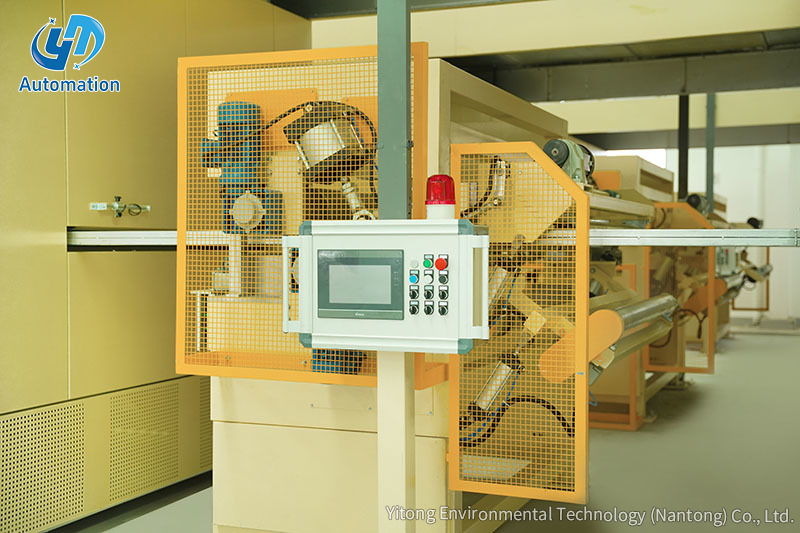
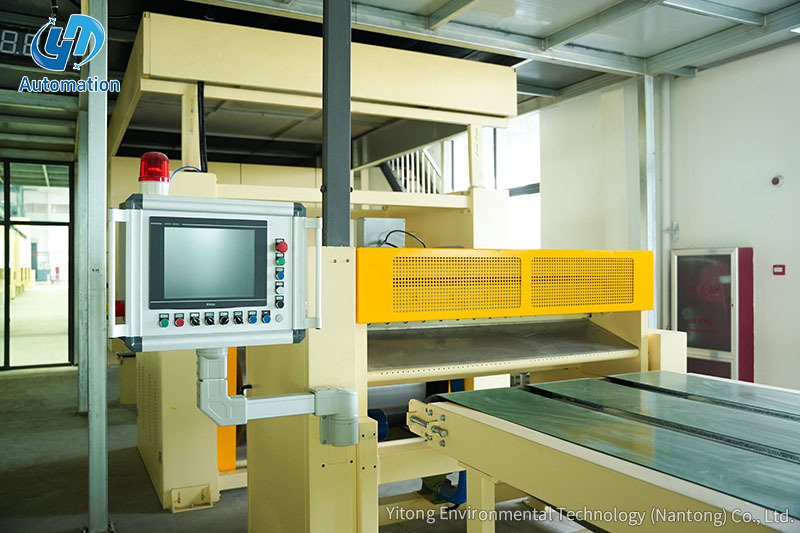
Fully automated impregnation lines use programmable logic controllers (PLCs) and HMI touchscreen interfaces to manage all process variables — line speed, resin bath level and viscosity control, metering roll pressure, zone-by-zone oven temperatures, tension throughout the web path, and winder torque. Process recipes for different products can be stored and recalled with a single operator command, reducing setup time and minimizing the risk of parameter errors when switching between product types.
Advanced impregnation lines integrate online measurement systems — including near-infrared (NIR) sensors for resin content and moisture measurement, web inspection cameras for surface defect detection, and basis weight gauges — to provide real-time feedback to the control system. These systems enable closed-loop control that automatically adjusts line parameters to maintain target resin content within ±1%–2% without requiring operator intervention for every roll.
Choosing the correct impregnation line configuration requires a clear understanding of the substrate, resin system, target quality specifications, and production volume requirements. The following factors should be evaluated:
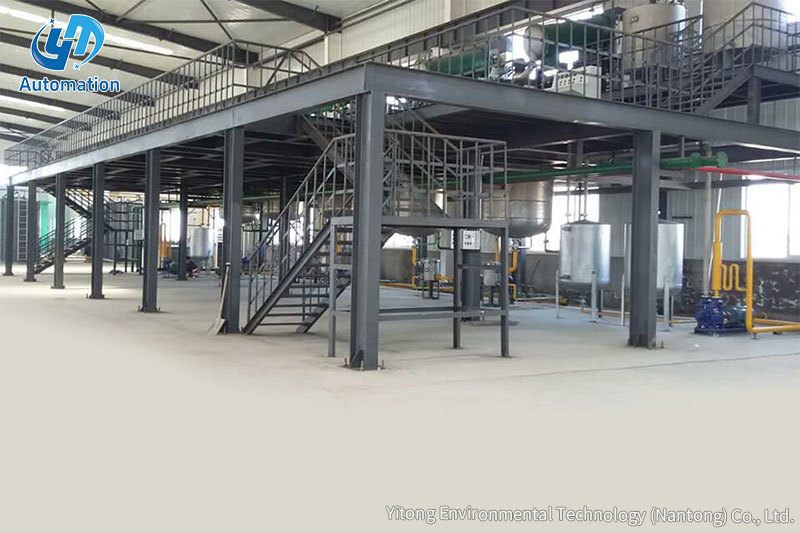
Yitong Environmental Technology (Nantong) Co., Ltd. is a professional manufacturer specializing in the design and production of impregnation coating and drying equipment. Our product range covers one-stage impregnation and drying lines, two-stage impregnation coating and drying lines, vertical gluing and drying lines, and the YT series horizontal impregnation coating and drying lines — a product line that incorporates multiple technological innovations protected by national patents.
Building on a foundation of learning from both domestic and international industry peers, Yitong continuously advances its engineering capabilities to deliver impregnation lines with the advantages of energy saving, high efficiency, and a high degree of automation. Our equipment is trusted by clients in domestic and international markets across the furniture, flooring, electronics, filtration, and composite materials industries. Whether you require a straightforward single-stage system or a complex two-stage line with integrated online quality monitoring, Yitong provides engineering expertise and manufacturing quality to match your production requirements.
Coating applies a layer of material onto the surface of a substrate, while impregnation saturates the substrate so that the resin penetrates through its thickness. True impregnation results in a product where the resin is distributed throughout the substrate cross-section, not just on the surface. In practice, many impregnation lines perform both functions — deep impregnation of the base structure combined with a controlled surface coating layer.
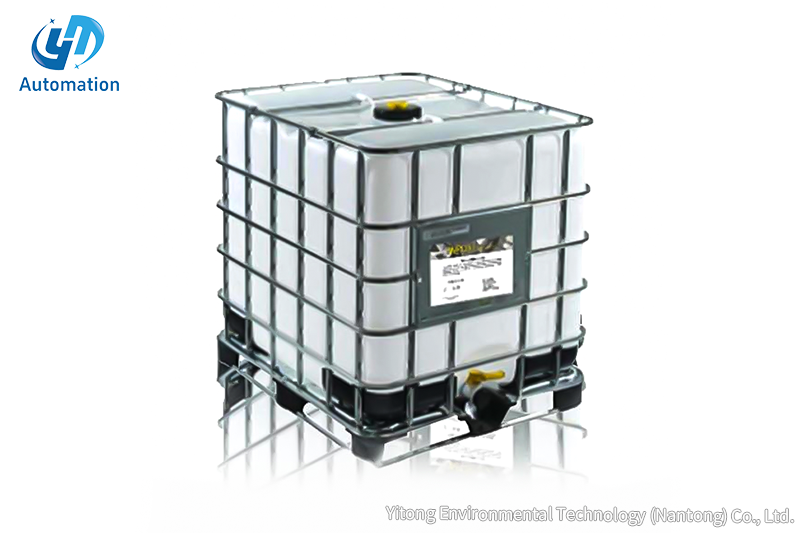
The most widely processed resin types include melamine-formaldehyde (MF), urea-formaldehyde (UF), phenol-formaldehyde (PF), epoxy, acrylic, polyurethane (PU), and polyester resins. The choice of resin is determined by the application — MF for decorative laminates, PF for industrial laminates and filtration media, epoxy for PCB prepregs, and acrylic or PU for specialty coated papers and fabrics.
The traditional method is to collect a sample from the running line, weigh it, dry it in an oven at 150°C–160°C for a specified time, and calculate the resin content by weight difference. On modern lines, online NIR sensors continuously measure volatile content and resin distribution across the web width, feeding this data back to the control system for real-time adjustments to line speed and metering roll pressure.
Yes, with appropriate design. Multi-product impregnation lines use adjustable metering roll systems, variable-speed drives throughout, and PLC recipe management to switch between different product specifications with minimal changeover time. Resin bath changeout procedures, cleaning protocols, and oven temperature reprofiling are the main changeover steps when switching between fundamentally different resin systems.
B-stage refers to the intermediate cure state of a thermosetting resin. After passing through the impregnation line drying oven, the resin in the substrate is dried and partially advanced in cure — it is solid and non-tacky at room temperature, but retains the ability to melt and flow again when subjected to heat and pressure in a lamination press. Achieving the correct B-stage level is one of the most critical functions of the impregnation line oven section, as it determines the flow behavior of the resin during final laminate pressing and ultimately the quality of the finished laminate surface.
Contact Us
Recommended Products
Let’s Get In
Touch
Yitong Environmental Technology (Nantong) Co., Ltd is a manufacturer specializing in impregnation equipment.


Contact Us
Phone: 13073202297 / 13023568111(WhatsApp/Wechat)
Email: [email protected] / [email protected]
Add:No.369, Nanhai Road, Tongzhou Bay, Nantong, Jiangsu, China


 English
 中文简体
中文简体
 русский
 عربى
عربى